It’s March 2018 and we’re leaving the deceptively challenging surf breaks of El Salvador and the flamboyant, overly inquisitive macaws of Honduras behind us, and continued on our merry way south. For the next couple of weeks we would base ourselves in Nicaragua; a country that had stolen my heart back in 2016, when I not only visited my first ever cacao farm, but made lifelong friends in the process. This time round there would be more (pinolillo) a scattering of unusual islands (including one with absolutely no motorised forms of transport, and a volcanic one in the middle of a lake), a few old haunts, and a country on the cusp of something none of us saw coming.

The border crossing is a relatively straightforward affair, a new stamp in the passport and a new chicken bus (possibly my favourite type of bus) is waiting on the other side. These buses are decommissioned American school buses reborn in chrome and hand-painted saints, and so named for the livestock regularly found on board; goats and chickens making their way to market alongside their farmers. They are also the circulatory system of Central America, and I have become genuinely, really fond of them. Next stop, Leon, known as Nicaragua’s intellectual and cultural capital.
Founded by Spanish conquistadores in 1524 and originally situated at the base of the Momotombo volcano, a series of volcanic eruptions and earthquakes eventually inspired the citizens to up sticks and relocate the whole city to its current position in 1610. León was Nicaragua’s capital right up until the mid-1800s, when a bitter and long-running rivalry with the city of Granada resulted in neither side backing down, and the coveted capital crown being handed to Managua insted, since it sat conveniently between the two. A very Central-American solution.
Interestingly for me, León played a significant role in Central America’s independence from Spain in the early 1820s, and again in the twentieth century in the Sandastia Revolution, a period many consider the most significant of the Latin American revolutions since Cuba. Inspiring murals commemorating that time are everywhere, unmissable and unfaded, contrasting in bright artistic strokes across tumbledown walls in a city that has clearly decided not to forget such a significant part of its history.


After exploring the historical and political artefacts the city had to offer, it was time for, you guessed it, more chocolate exploring. This time the ChocoMuseo of Nicaragua. Having explored Granada’s ChocoMuseo of Nicaragua back in 2016, it seemed only fair to visit León’s for the purpose of rigorous comparative research. In this instance, said research was relating to the quality of the pinolillo, a drink I had become alarmingly addicted to from that previous trip, to the point where I sought out my own ways to make it on returning to the UK. I have to say, León’s had the edge. The balance of spices was well matched to the cacao, and they didn’t over-ice it, which meant it didn’t get watery towards the end. 10/10, would recommend.
You’re wondering what pinolillo actually is, it’s a drink widely consumed across Central America, but particularly in Nicaragua and Costa Rica. In fact, the Nicaraguans are such fans that many refer to themselves as pinoleros with great pride. The combination is simple, but it does take skill and care to get it just right. Roasted corn and cacao are blended together, then milk or water is added (it’s better with milk, trust me on this) along with spices to taste. It can be served hot or cold, but on a hot day in the city, the chilled version hits the spot just right.
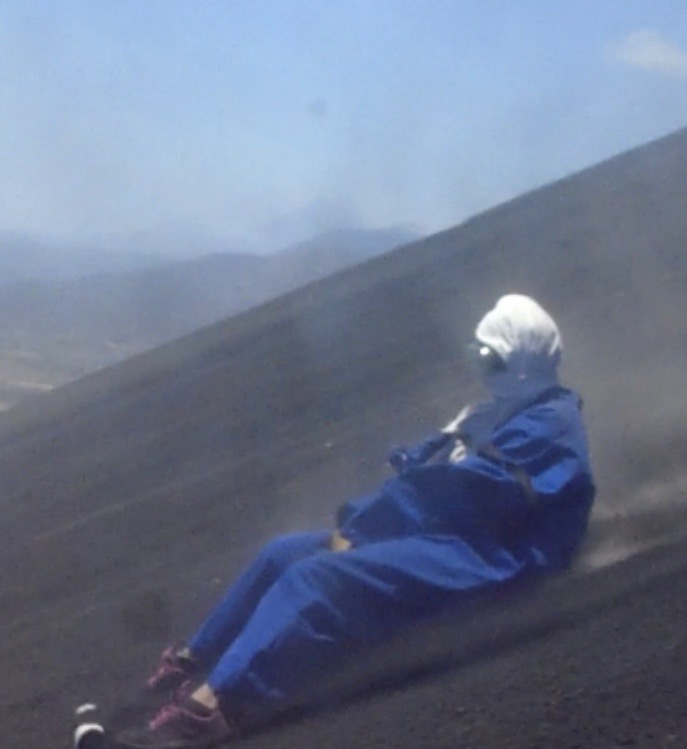
We based ourselves in León for a few days, discovering delightfully quirky little museums hidden behind tumbledown wooden doors, and venturing further afield for the exhilarating activity of sand boarding down the side of a ‘young’ volcano (Cerro Negro), something I had been greatly looking forward to doing for quite some time. As you do.
After volcanic sand boarding, cultural and political explorations, important pinolillo comparisons, and a chocolate fix, it was time to head East to the Corn Islands, a pair of islands snuggled off Nicaragua’s Caribbean coast. The journey east was… interesting; a chicken bus, then a light aircraft over to Big Corn, before a questionable ‘ferry’ crossing to Little Corn. No chocolate was to be found on the islands, but luckily I had a stash squirrelled away from Honduras and El Salvador, plus a couple of kilos of cacao beans from the farm excursion in Guatemala. Lightly roasted in a pan and crushed over pretty much everything we ate, they really were delicious. I’d thoroughly recommend travelling with a bag of cacao beans if you ever get the opportunity.

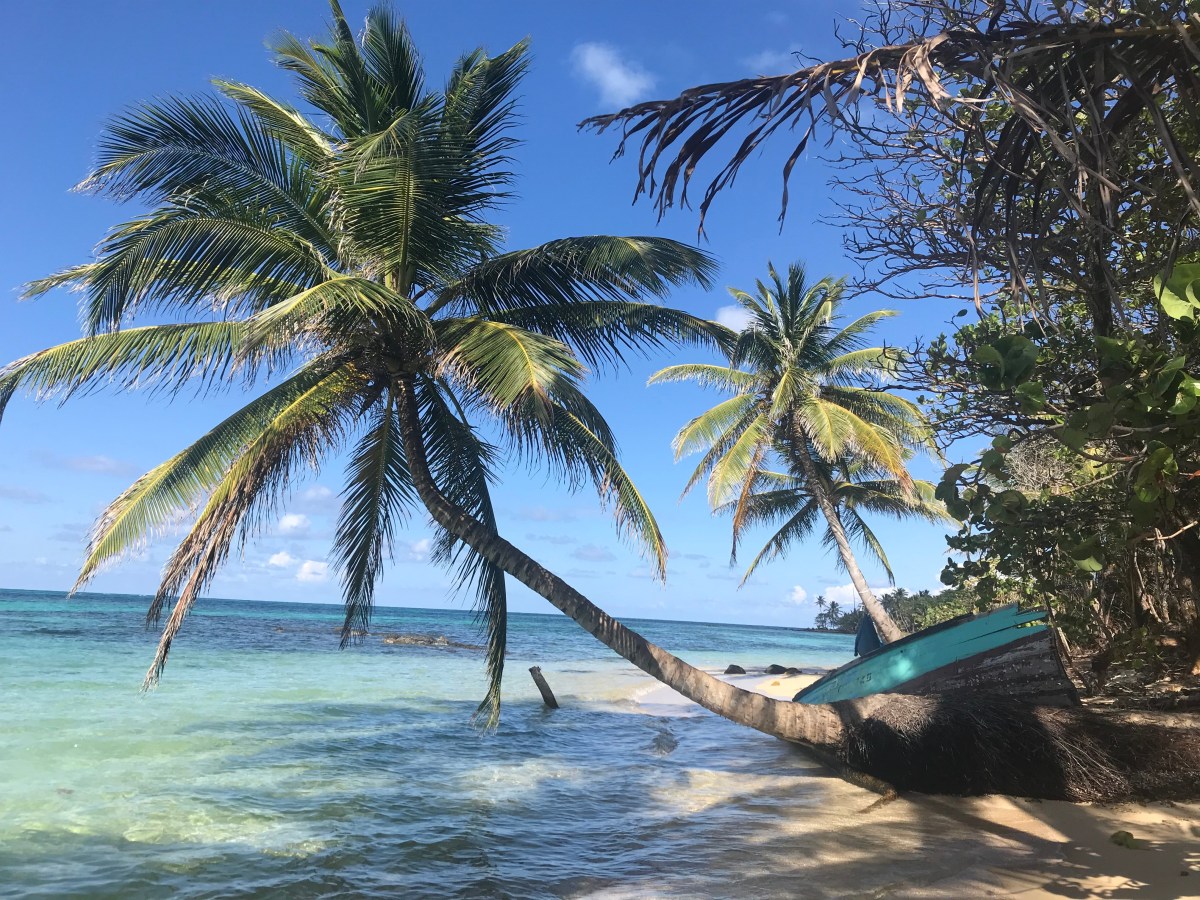
While Little Corn did not live up to the ‘Corn’ part of its namesake (there was no corn anywhere on the island), it did deliver in other ways. The complete absence of any motorised transport was I have to say, quite inspiring. Anything and everything that arrives on the island — fridges, sofas, televisions, food, bicycles, livestock, residents, tourists — comes in by ferry. Strange metal runners and sometimes logs are laid down on the sand, over which everything (except the residents and tourists) is wheeled, dragged or shoved up onto the rudimentary ‘pavement’, with much fanfare. People lived right in amongst the jungle in small single-storey houses of not more than two rooms. Wandering the little sand paths at night you’d come across not only gatherings of teenagers giggling away in the dark, but also groups of blue crabs, huddled in ways not too dissimilar to the teenagers, all seemingly mesmerised or basking in the eerie glow of the televisions in the houses.
Over a week of exploring we investigated every nook and cranny of the island and its surrounding waters that we could. From treetop lookouts to the depths of the ocean. Booking three dives with Las Palmeras we made sure this included a night dive that opened up an entire underwater galaxy, filled with the little sparks of bioluminescence, bright orange starfish, and giant turtles who inquisitively swam past us with side glances before loafing off into the dark distance. Back on dry land the next day (while Sam headed back out to sea to go fishing) I couldn’t resist a horse trek around the island, led a very smiley barefoot man named Miguel, who had one tooth, three horses, a kitten and a very friendly dog. The trek took in the whole island, which isn’t saying that much given you can walk from one end to the other in an hour. It did, however, deliver one of my favourite discoveries of the trip: a magical little allotment tucked into the jungle, immaculately maintained amidst the wild chaos of vegetation surrounding it, with a beautifully hand-painted wooden sign joyfully declaring ‘We sell things for salads’. Well, that was dinner sorted then. Bach at the ‘ranch’ we dismounted and Miguel’s wife and young child insisted in showing me their own vegetable plot and that I must take some plantain with me for dinner (how did she know I LOVE plantain?).


Our final day we decided to explore on foot, clambering up the old rusting metal lighthouse in the middle of the island — the highest point on Little Corn — for a full view of the sandy little paradise we’d temporarily called ‘home’. Said vantage point gave clear views of the lush and dense jungles and coconut groves, with snaking little sandy paths leading to the beaches and crystal clear waters, views quite literally for days, only interrupted by the lump on the horizon indicating Big Corn in the distance. Back down at ground level we made our way to one of the beaches we had spotted from our treetop vantage point. From up there it had looked like there was a shipwreck we were curious to visit. After exploring said shipwreck and other looming hulls rising from the sands in various state of rusty surrender, we decided to get below the waterline for one last snorkel before heading back to Big Corn in the morning.
There was one final answer I needed to find, however, before we left this sleepy little paradise. The question had been burning away since we first walked along the sandy path to our accommodation. We passed a white commemorative cross bearing the name Walter Hunter, and I had to know the story. I wasn’t wholly prepared for the answer. Although aware of the narcotics situation in Latin America, having studied it a little at university, I hadn’t appreciated quite how much of an impact it had had on Nicaragua, or the Corn Islands. Walter, as the story was told to us, had been a well known baseball player on Little Corn, famous enough that there is even a baseball stadium on the island named in his honour. Walter fell in with a bad crowd, getting caught up in the narcotics trade and was killed, allegedly over 35kg of missing langosta blanca ‘white lobster’, the local name for the cocaine that periodically washes up on these shores. The high profile killing of such a well known figure sent shockwaves through the islands and the fledgeling tourism industry Nicaragua was busy building at the time.


Next morning we reluctantly said farewell to this sleepy little paradise, with its tv-obsessed crabs, hidden jungle vegetables plots, friendly and welcoming locals and sandy secrets of the past. We braced ourselves for the life-or-death ferry crossing back to Big Corn, followed by the marginally less life-or-death light aircraft back to Managua, a very appropriate way to be forcefully dragged back to the ‘real’ world. The following two days were spent with a dear friend I’d first met in Nica two years earlier on a cacao research trip with Ingemann Cacao. Ingemann are doing outstanding work with Nicaraguan growers, developing and perfecting techniques around fermentation, and other post-harest practices. For many this is the unglamorous part of the process, but a significant and fundamental part that must not be overlooked. As anyone who has stood over a fermentation box in the heat will tell you, this is where a great deal of a cacao’s flavour that will eventually be teased out in a chocolate bar begins to develop. Between bachata, beach parties and pool parties in Managua and San Juan del Sur there was a fair amount of industry catching up to be done. There was not a great deal of sleep.
After saying our goodbyes it was time to hit the road again, and then another ferry crossing to another island. This time Ometepe, formed by two volcanoes, their peaks, joined at the waist, as two lovers embracing in a bachata dance, rising straight out of Lake Nicaragua like an early explorer’s drawing of a mystical land. I stumbled at the very first hurdle, realising on arrival that I’d left my phone in my friend’s car back in San Juan, and she’d since driven on to Managua. Cue chaotic scenes starring one gringa with a barely passable grasp of conversational Spanish, set across one wild lake-based ferry crossing and multiple chicken buses from Ometepe back to Managua. Due to the limited Spanish spoken by said gringa, the gringa waas handed somebody’s chicken to hold during one bus journey, for a questionable length of time. To this day I remain unsure whether this was a genuine practical necessity or purely for the owner’s entertainment at giving a gringa a ‘lap chicken’. Either way I found it thoroughly entertaining, and had some insightful, if somewhat broken, conversations with the chicken owner. I learnt a lot about chicken buses, the markets, politics, and some insights into everyday life in Nicaragua.
I survived the round trip back to Managua, and on my return the resulting three days on Ometepe sped past us in a blur of dust and water. We hired a dune buggy and spent a good solid day trundling around the island’s rougher tracks, before taking a wander around a somewhat swampy river mangrove that almost cuts the volcanoes of Concepcion and Maderas in two. Elsewhere on the island there were waterfalls to be jumped into that were just the right level of cold to make you squeak or gasp, but not cold enough to make you immediately regret your life choices of the day. Then there were the little villages in between; a scattering of houses, a church, washing on the line, occasionally a dog, laying nonchalantly in the middle of the road with absolutely no indication of preparing to move.


Then it was back on the questionable ferry to the mainland (what is it with us and questionably ferry crossings in Nicaragua). Returning to Nica as part of our Long Way South had been both an exciting and a deeply welcoming experience, and it remains a deeply special place for me that I have no doubt I will return to in future.
But there was something that had begun to niggle at me; one evening in Leon we happened across a teenage rap battle or batellas de gallos in one of the plazas. Parked along side it was an open-top truck, hand-painted in the reds, yellows and greens of the ruling government party, with a Sandastia flag flying off the back and “Daniel! FSLN 2018” emblazoned across the bumper. No one paid it the blindest bit of attention, it was simply part of the furniture, the way the colours were part of the furniture in Nicaragua, but within a month the squares and plazas of Nica would be full of something else entirely. Peaceful protests spread across the country, led by students and pensioners, and everyone in between. they were met with an overzealous display of force and a brutal crackdown by the Nicaraguan authorities. This resulted in over three hundred deaths and more than two thousand injuries, with over sixteen hundred people detailed, and many facing enforced ‘disappearances’ and torture. Artists were among those hunted afterwards; musicians, poets, dancers, even cartoonists who had turned up to the marches with protest songs and drawings of the dead, seaking justice. Many are now in exhile.
We only found out the true nature of the unrest, and of the horrors that followed, much later on in our trip – somewhere around the time we crossed in to Panama – from my dear friends back in Nica living through it. A stark and sobering contrast for such a beautiful country, filled with such fun-loving, vibrant and generous people.


But this is what I choose to carry with me through the rest of our Long Way South: A hand-painted sign in a jungle clearing, selling things for salads. Blue crabs basking in the television light. A barefoot man with one tooth and three horses and the biggest smile you can possibly imagine. That particular balance of spice and cacao in a cold glass of pinolillo on a hot afternoon in León, the meticulous fermentation process and farming practices for cacao being developed by Ingemann, bachata in the jungle. And a chicken, perched on my lap somewhere along the journey from Ometepe to Managua, while a bus full of strangers watched me hold her and tried very hard not to laugh.
I’ll go back one day, once the dust has settled. I do hope there’s a chicken, and a cold glass of pinolillo waiting for me, and that the jungle farm still has stuff for salads.