
Having recently taken part in the Women of Cacao Summit last month and meeting many inspiring women and families working with cacao in the Americas, I am reminded of a wonderful time I spent back in 2018 meeting the remarkable Vicki and her (now husband) Jorge. Faced with their fair share of challenges before I met them, and battling during the Covid years since, it is great to see their chocolate haven still going from strength to strength. So I felt inspired to revive this story from my archives.
It was late April 2018 and Sam and I had spent the past week hugging the Pacific coast of Nicaragua and Costa Rica, it was now time for a change of scene. After an abrupt 3am exit from Playas del Coco to catch a chicken bus to Quepos, made all the more absurd by the hoards of blue crabs marching across our path as we took the sandy back roads up to the bus stop, we were finally edging closer to our next chocolate destination. A fitful night sleep was had in an overheated box room in Quepos near the Pacific beach town of Manuel Antonio, before we were on our way once again, through the kindness of friends, along dusty, bumpy, and sometimes non-existent roads to Mastatal, to discover the La Iguana Chocolate story.
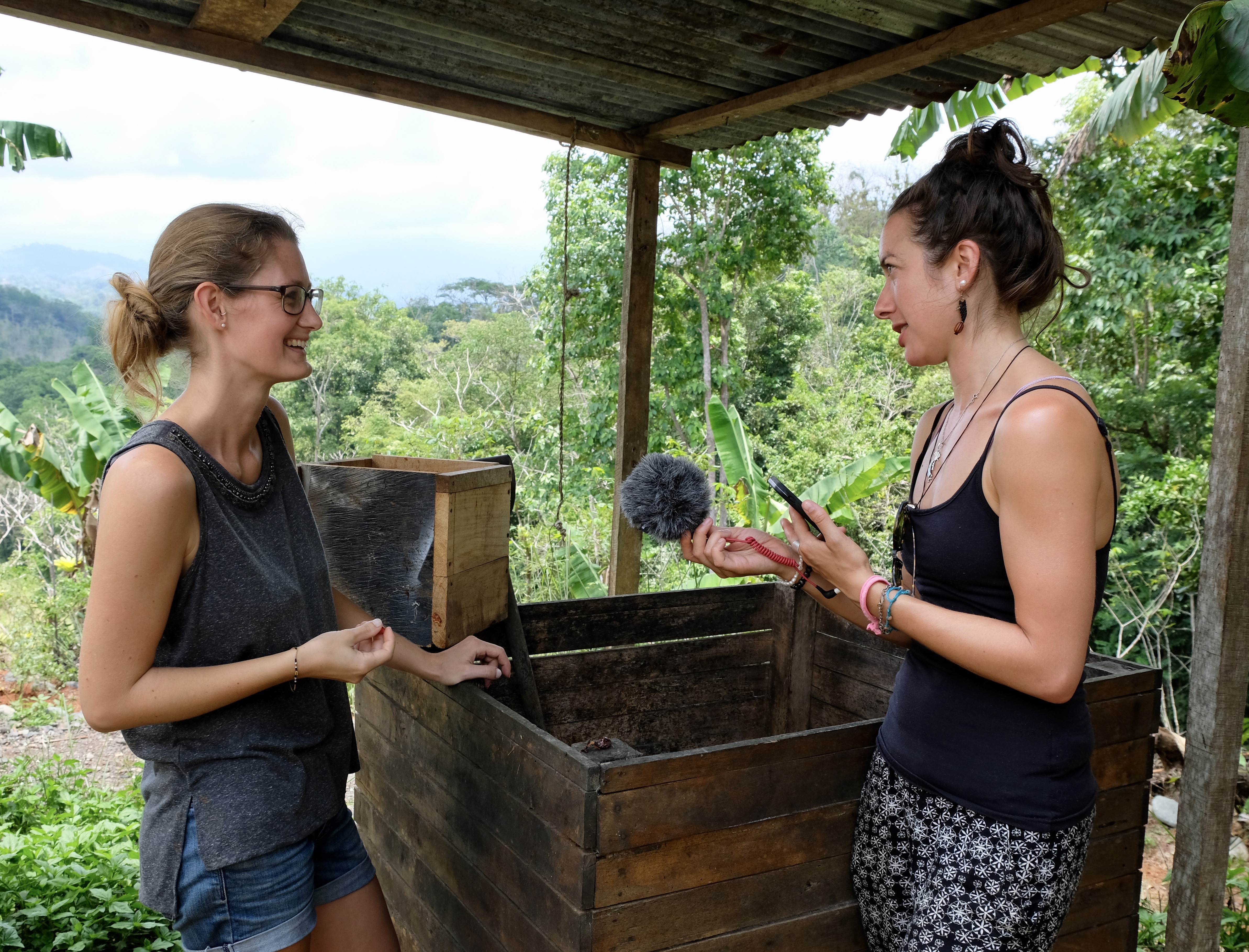
Leaving behind any form of comfortable road behind us, we bounced our way up through the lush green jungle, the last dregs of city life fading into the distance. Giant blue butterflies rise up from the ground and flap about the car, unidentified birds squawk and chirp from the trees, too well hidden or too fast for us to see them. We arrive in a small pocket of the Costa Rican jungle known as Paso de las Lapas or Path of the Scarlet Macaws. An area known for its natural diversity, and it’s clear to see why, the air is thick with croaking, ribbiting, buzzing, whirring and cawing, as if each animal was proudly announcing or alerting to our arrival. We arrive at the farm in good time, things start early here in Costa Rica, and meet our hosts for the next two days – Vicki and Jorge of La Iguana Chocolate.
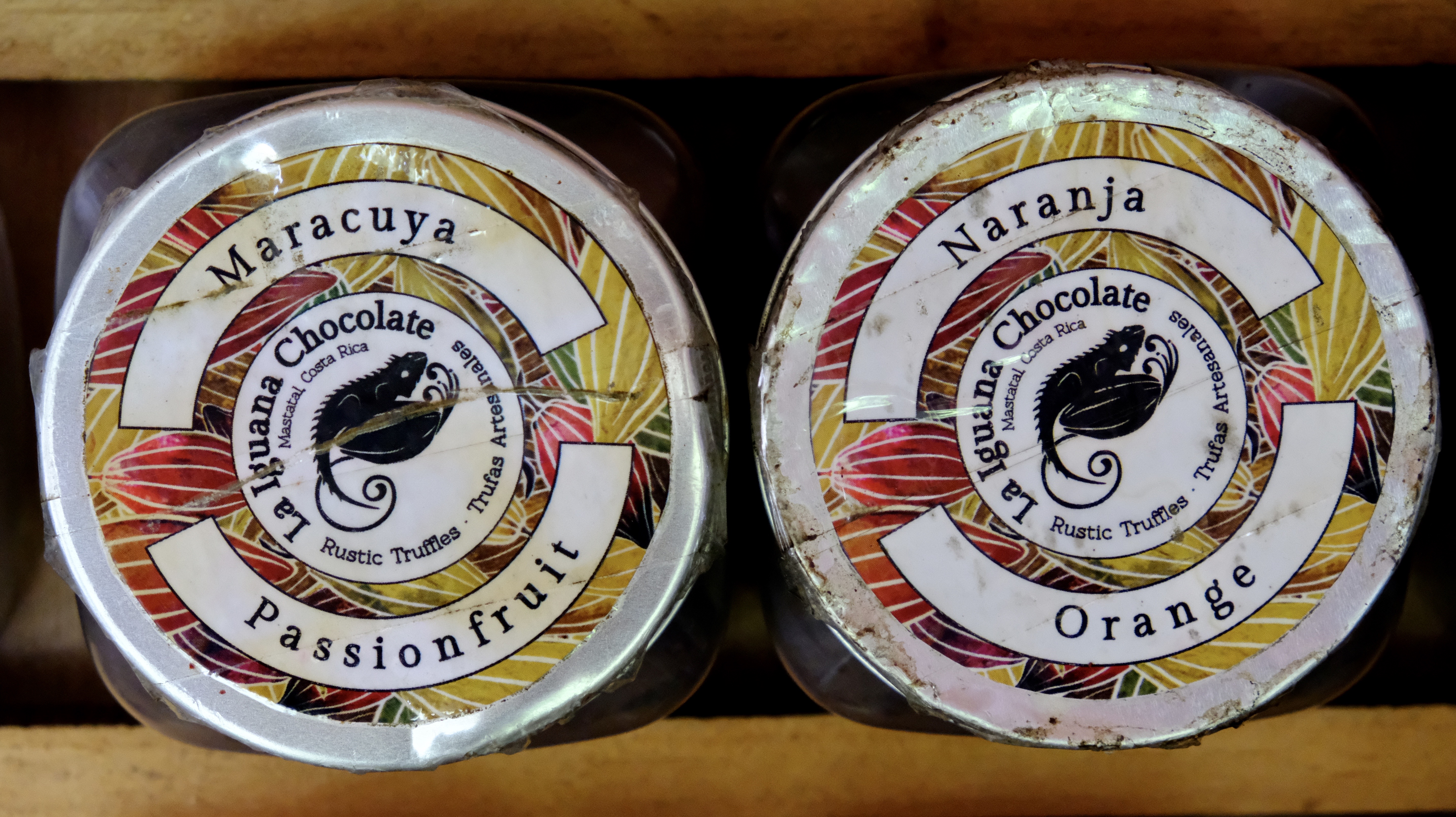
Whilst taking us around the farm, Vicki explains they are just coming out of high season where they were receiving an average of 5-6 tours a week. This is their busiest year yet, and having run no marketing campaigns themselves they are surprised that awareness of them has grown organically so quickly from guests leaving reviews on Trip Advisor. They are a small family run business, and despite the fact about 90% of the beans they harvest go into their own chocolate products, they often struggle to keep up with demand for their unique hand made tree-to-bar chocolate bars and ‘rustic truffles’.
The chocolate does not travel far, everything is sold at the farm itself, or occasionally at a handful of markets. Nothing leaves the country, or really even the region (unless taken back by volunteers or guests to their countries of origin). The nearest post office is an hour and a half away, and the encomienda system (where your package gets taken across country via an intricate network of chicken buses) although effective, is exceedingly hot and therefor not a suitable form of chocolate transportation. So anything they do sell outside of the farm (including at the markets) is hand delivered by Vicky, in a cooler box under her car seat on her trips into town. In addition to the chocolates though, that remaining 10% of raw ingredients often goes to other companies – making beer and icrecream, and even to a spa offering chocolate facials.


The La Iguana story, like those of many chocolate farmers and makers, is a story of hardship, life choices and sheer determination. The farm started as part of a co operative back in 1985, which struggled as growers were not paid fairly for their beans, only 40- 50 cents per kilo bag of dried beans! To compound the situation, the Monilia fungus struck infecting the entire crop of cacao trees, and the co op collapsed. Jorge’s grandfather, Don Juan Luis Salazar, had about 15 hectares a little way up in the town in addition to the small homestead area around the farm, and kept the trees on when everyone else was persuaded to destroy them and plant beans and other small crops instead. His belief being it would be easier to maintain existing trees, than destroy them and start on something new. Then in 2002 the national park was formed, and officials drew boundaries on a map of where endangered species were. A great many families found their homes and lands on the wrong side of those lines, resulting in many loosing their homes and farms, as when an area becomes a national park, you no longer have rights and access to it. This is all well and good, when conserving endangered species is concerned, but the family lost 15,000 cacao trees, and at the time were still waiting for a government pay out to cover all their losses due in 2002.
Understandably, the family began to suffer, even struggling to put food on the table and were running out of options.
It was then that Jorge and his sister Mariana, both studying eco tourism at the time, visited a cacao farm in the Osa peninsula as part of their studies. The farm had just started working with tourists and it was this trip that sparked an idea in both of them, they could do something similar with their remaining family cacao farm back in Mastatal! There was already an eco farm, Rancho Mastatal, specialising in permaculture tours and experiences a mere beans’ throw from them that had just started in the village and were bringing through the first trickle of Westerners to Mastatal. They took the leap, and La Iguana first opened its doors to volunteers in 2005, offering the opportunity for people to work on a real cacao farm in the jungle! They took out a $10,000 start-up loan from the bank, granted when it was still possible to take out such a loan against property, and they spent it wisely. Treehouses were built in the jungle (which stayed in and were amazing), further infrastructure, beds, toilets, all the boring but actually very important stuff needed to host volunteers on a remote farm in the middle of the Costa Rican jungle.
Over the years volunteers would often ask “Why don’t you start making your own chocolate here?” and eventually, after being asked this question for the thousandth time, they started to experiment.
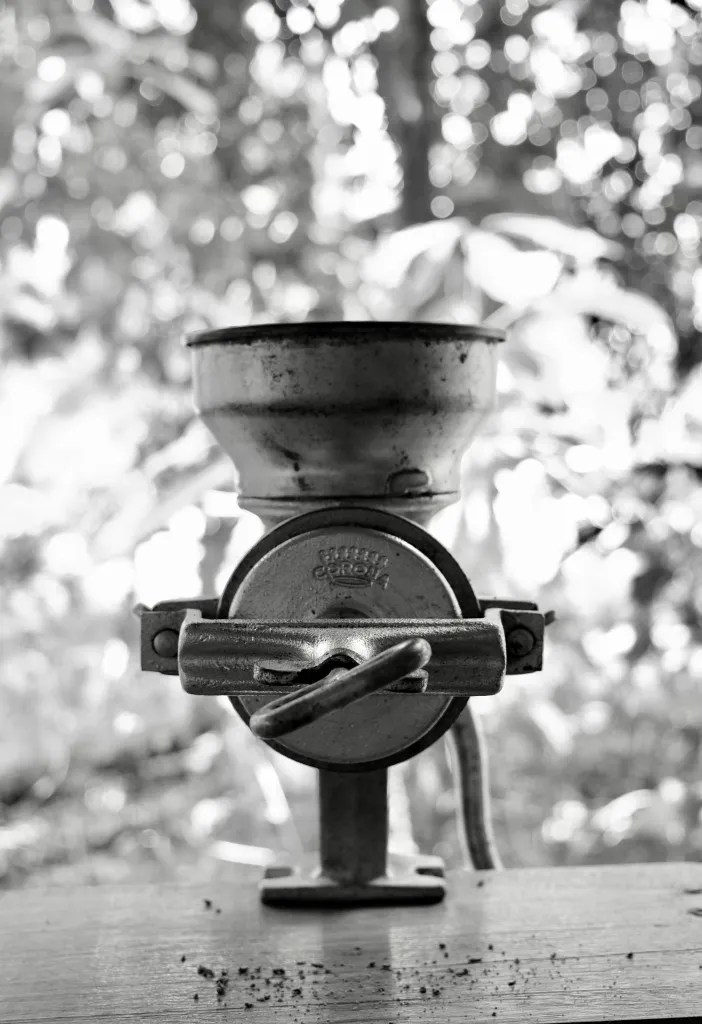
Once the infrastructure was in place attention could then turn to the chocolate itself. But the machines had to come from somewhere, Here in La Iguana money had always been meticulously managed, so this was not a place where you would find the shiniest, newest machines. Here most of the machines are handmade, comprising interesting combinations of vintage washing machine parts and car jacks. Two of their most useful pieces of equipment which have dramatically increased their output, are the creative genius of an Irish mechanical engineer who had, as Vicki puts it; “a flurry of activity in his final week with us, having spent the previous two months in the bar.” For their cracker and winnower they use a repurposed Corona corn grinder with various attachments, and their butter press is a very impressive feat of engineering; the base being an old pressure cooker connected to hydraulic car jack. Ground beans are placed in a fine mesh bag inside the pan, and by cranking down the jack for 30-40 mins, out of the bottom comes cacao butter as clear yellow liquid, and inside the pan is left the cacao press cake, which after grating over a cheese grater gives a course ground cocoa powder. I found the car jack cocoa presser surprisingly familiar, it was similar to what I had seen at the Grenada Chocolate Company while at the Grenada Chocolate Festival in 2017.


When the Salazar family first started out trying to make chocolate in this humid tropical Costa Rican climate, long before they had built their first machine, it was a mammoth task not for the faint of heart. Given there was no internet, one bus up and down to the local area a day, and one pay phone in the nearest village (a half hour walk away that you had to line up to use) there was no easy way to make contact with the outside world to seek chocolate making advice. No Youtube videos to follow, as Cata Chocolate back in Playas del Coco had done. As a result, crazy experiments ensued, mostly from Jorge’s mother Lydia; such as hanging beans over stoves to try and get the butter to drip out and peeling all beans by hand when un-roasted.
Being cacao farmers they were experts in nurturing and caring for their trees and processing the beans in harvest, but beyond sorting, fermenting and drying, the world of chocolate making was an alien concept to them. Over time, as more visitors came to stay from the chocolate industry, wanting to learn about the early stages involved in cocoa production, so the family began to learn more about chocolate making from them.
Then a milestone occurred around 2010 in the form of a Swiss chocolate maker, who stood outside in 80%+ humidity and taught Jorge how to temper chocolate outside on a marble slab. It was also around this time that Vicki first came to the farm as a volunteer for a couple of months. Sheepishly admitting she had never really wanted to get into chocolate, or even really liked it that much. But something kept pulling her back to the farm, until one day she just never left, admitting that now she is just too obsessed and finds cacao and chocolate, and the whole process utterly fascinating. There is now no end for her to perfect the process.
About 5 months before our visit, they had moved their conching and tempering process inside, to a tiny air conditioned unit (a mini chocolate kitchen in the jungle) with electricity running from Jorge’s grandmother’s house. Jorge laughs when he remembers the times, as a child with his brothers, as small children harvesting the cacao pods with their grandfather, knowing that chocolate could be made from it and trying to make it with little hand grinders, then getting upset when it did not work. To think where he is now, and the knowledge he has behind him, of the whole end to end process is something he would never have considered a possibility before, he still can’t believe how far he and his family have come from so little.
Their bars are delectable, expertly and carefully hand crafted, every step of the way. And you know they really mean it when they say ‘made from the freshest ingredients’ because it is right there, surrounding you. Their single origin dark bars have a beautiful smooth and deep profile that just envelops your taste buds, no hint of the bitter notes of commercially produced chocolate, because the Salazar family uses properly fermented cacao, their own beans, fermented their own way on their own farm. Their flavoured bars bring vivid bursts of flavour, the sparks of fresh ground ginger awakening your palate, or the woodiness of fresh ground cinnamon bark, taken straight from the trees in front of you. Cardamon, cashew, hibiscus, fresh ground turmeric, the list goes on. These are inclusions done properly, with purpose.


In addition to the chocolate making, Jorge has a burning (and infectious) passion for growing a plethora of plants and crops across the farm, he loves that they are able to grow what they can then transfer into flavours, and see how the process goes from plant to the final spice. We could see turmeric roots, sliced and dried ready to be ground into the chocolate, cardamom pods already drying, cashews still attached to their plump vibrant bases, and Jorge guides us around the farm pointing out ‘ice cream beans’ that we then hoik out of the trees and gather up to snack on (they really do taste like ice cream, in bean form). Shortly after this delicious snack he points out the vanilla flowers, currently in bud, assuring us they will have opened by the morning. True to his word, they are waiting for us early the next morning and we all gather around, as if taking part in some morning ceremony, and watch him carefully pollinate with a cocktail stick, in 9 months time they will have vanilla!
But what are their future dreams? Given their previous challenges they remain understandably cautious, the family can’t imagine more than this. They have grown up in this tiny mountain village and have never left, having been so busy working they have barely had the time to dream of the future. Right now the concept of a big professional kitchen, or even a cafe is alien to Jorge’s father, and his mother can barely get her head around the fact they now have consistent packaging. Both Vicki and Jorge are reassessing their fermentation technique to improve product consistency, having built their own micro ferment box, they are now running small fermentation batches.
Jorge is keen to take on more staff, not just to increase their output, but to increase employment opportunities in the local area. He also works tirelessly to maintain the right environment and biodiversity on their farm, through intercropping – growing cacao interspersed with other crops, especially fruit trees and herbs and spices which, when all grown together, all help each other and the soil; keeping the ecosystem of the farm in balance. Cacao needs the other plants for shelter, and ground habitat, the other plants need cacao. In Jorge’s own words “Cacao is good for the environment, it is a big breaker of carbon molecules, and also chocolate comes from it”.
So there you have it, from the origin, proof that chocolate is good for the planet and good for your health, and it’s time to start paying more attention to it and those who care for it before it is too late.


