
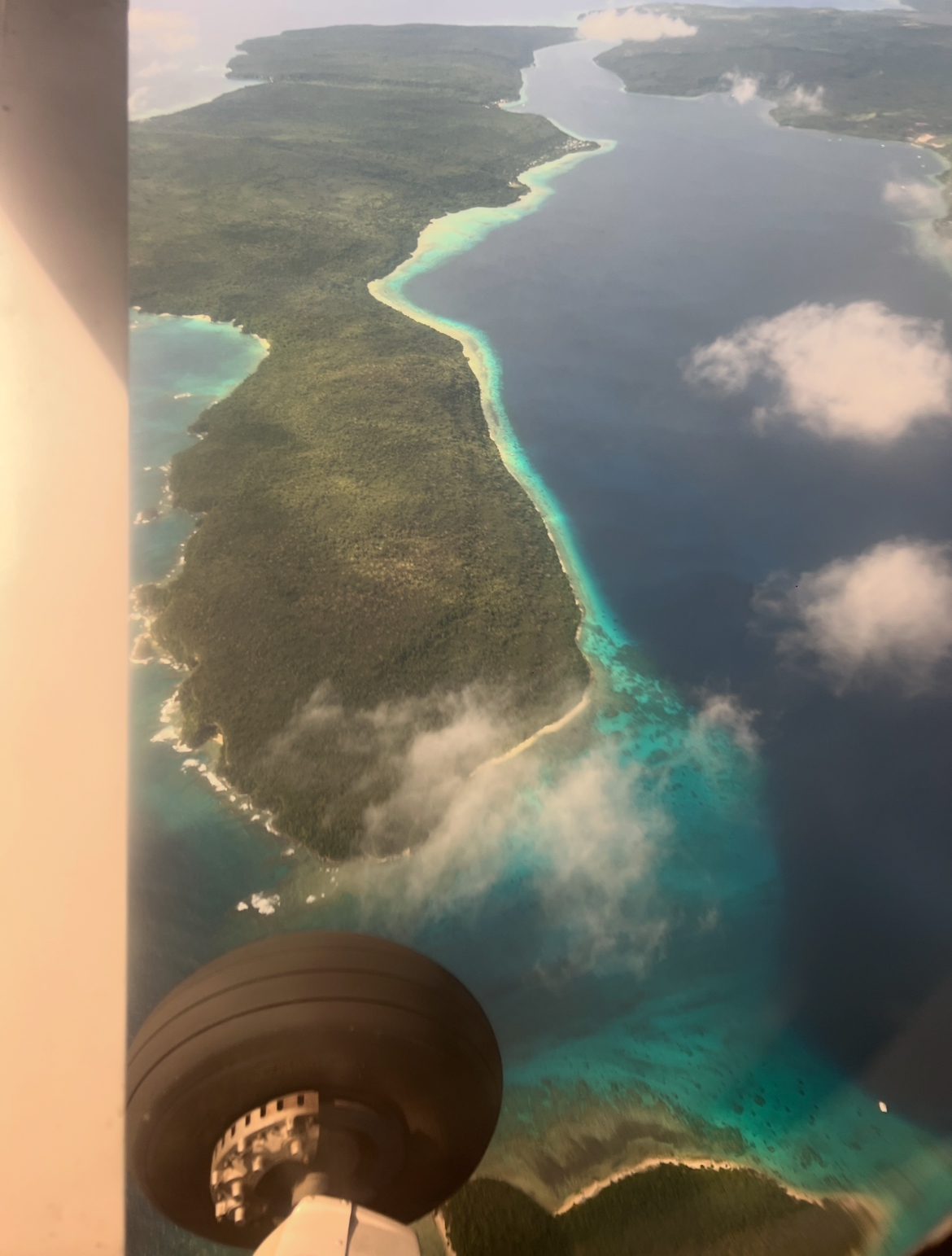
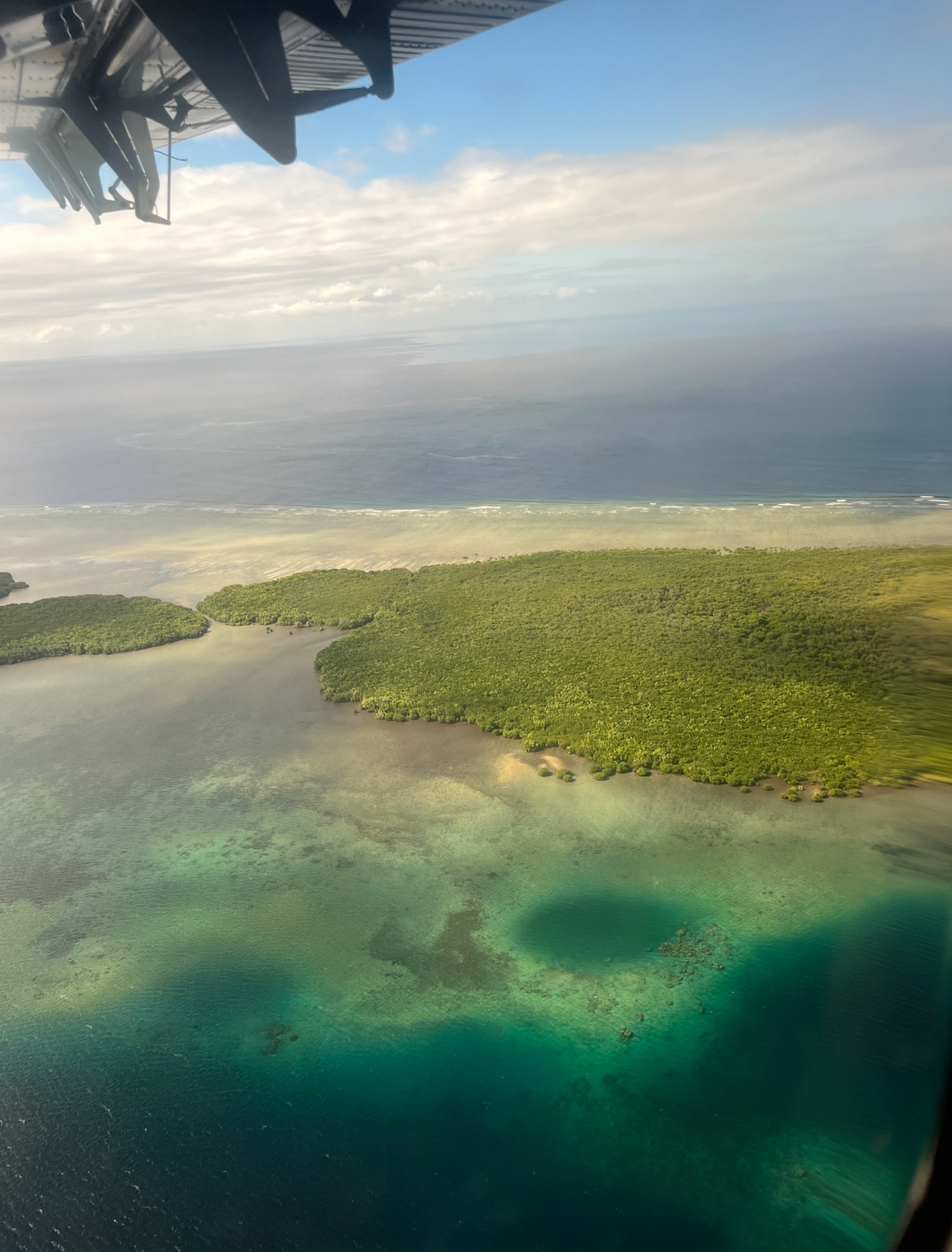
Having spent the first few days of our Vanuatu adventure on the island of Efate relaxing and catching up with Oli at Gaston Chocolat, it was time to head to Malekula. As the plane arced around and began it’s final decent, the azure blue water stretched out below us, lapping at the white corral sand beaches that rimmed the lush emerald green of the island. I felt little rushes of excitement for what chocolatey adventures lay ahead.
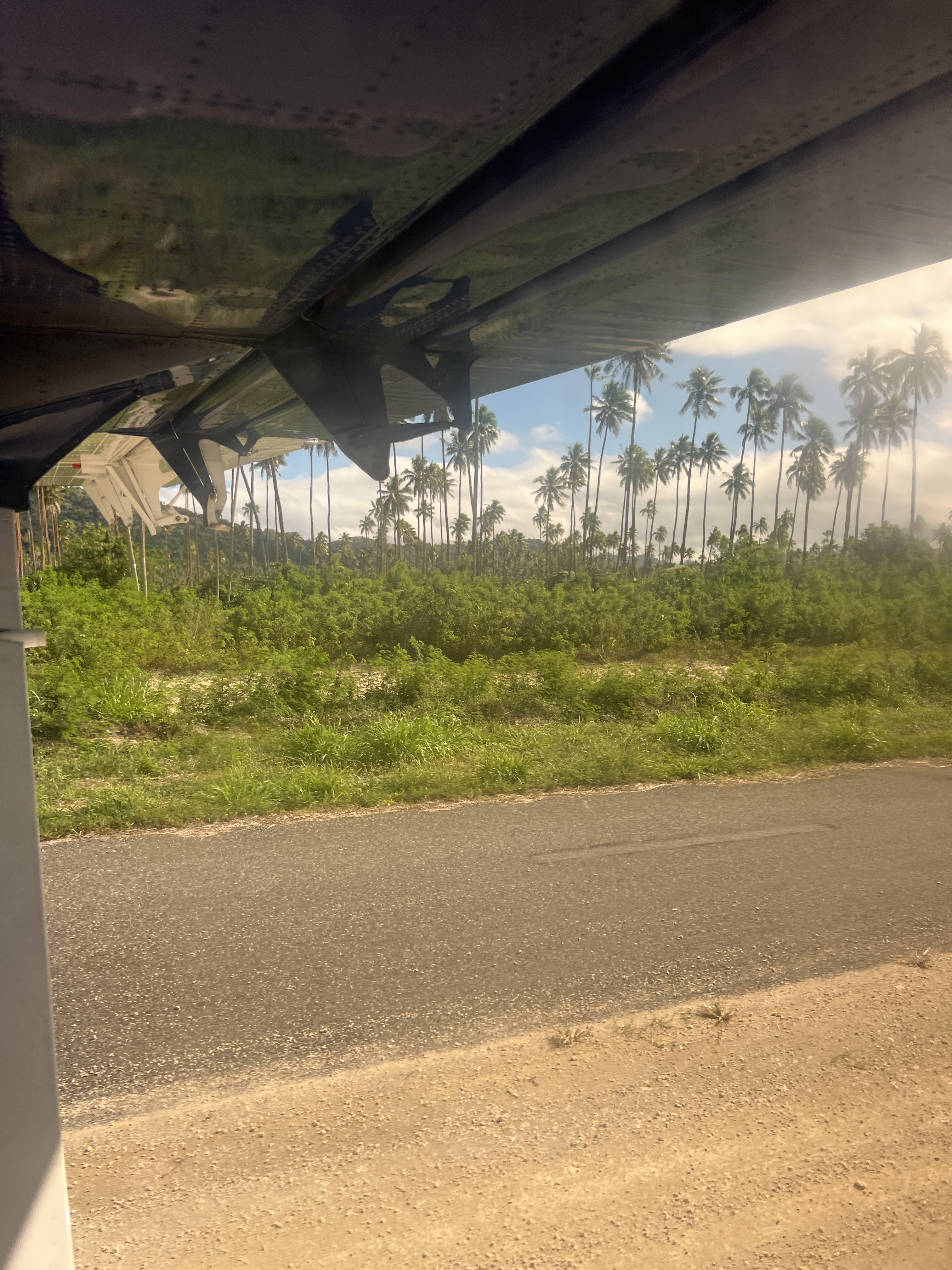
We were greeted by tall coconut trees all leaning slightly at an angle, and a somewhat bouncy landing onto a firmed up strip of sand with a shipping container at the end of it…we had arrived in Norsup airport. Being two of only three non-locals on the tiny aircraft we are easy to spot, and a local saunters over with a beaming grin “Halo, Hellie and Sam? I am Roy, welcome to Malekula.”
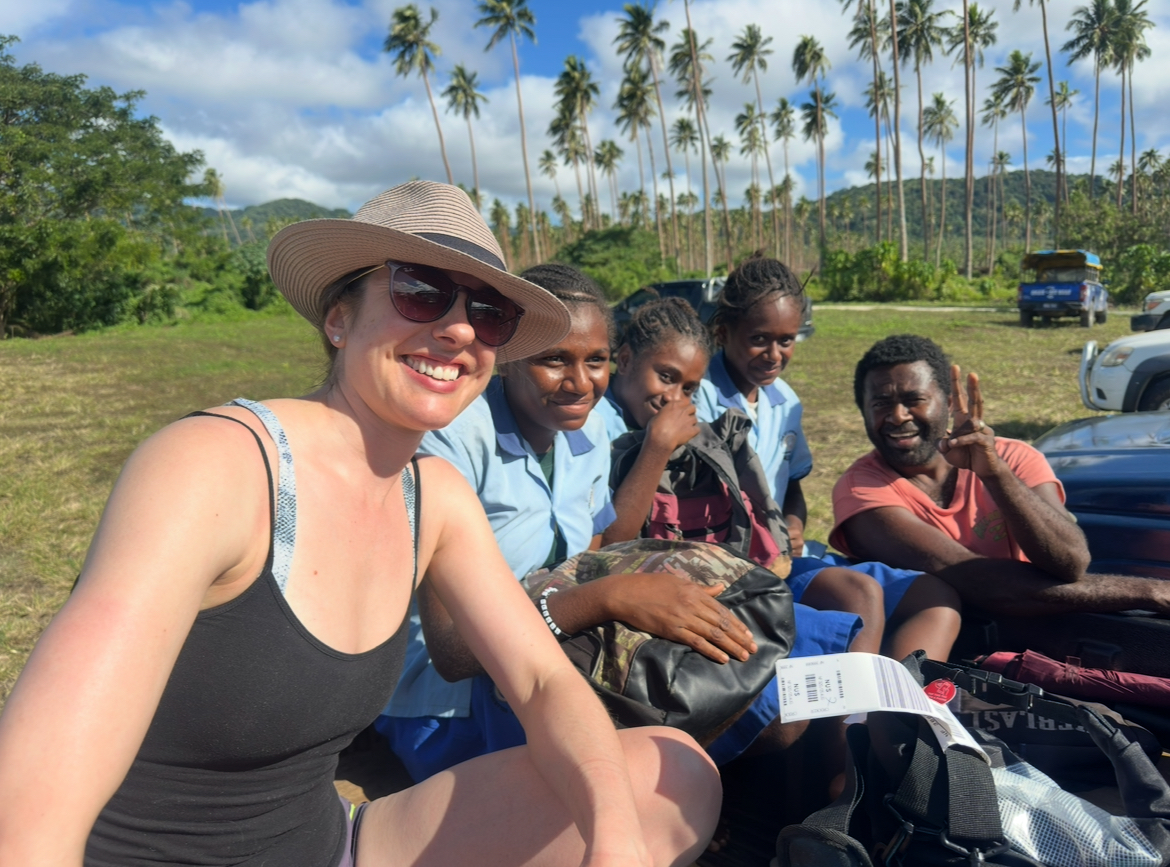
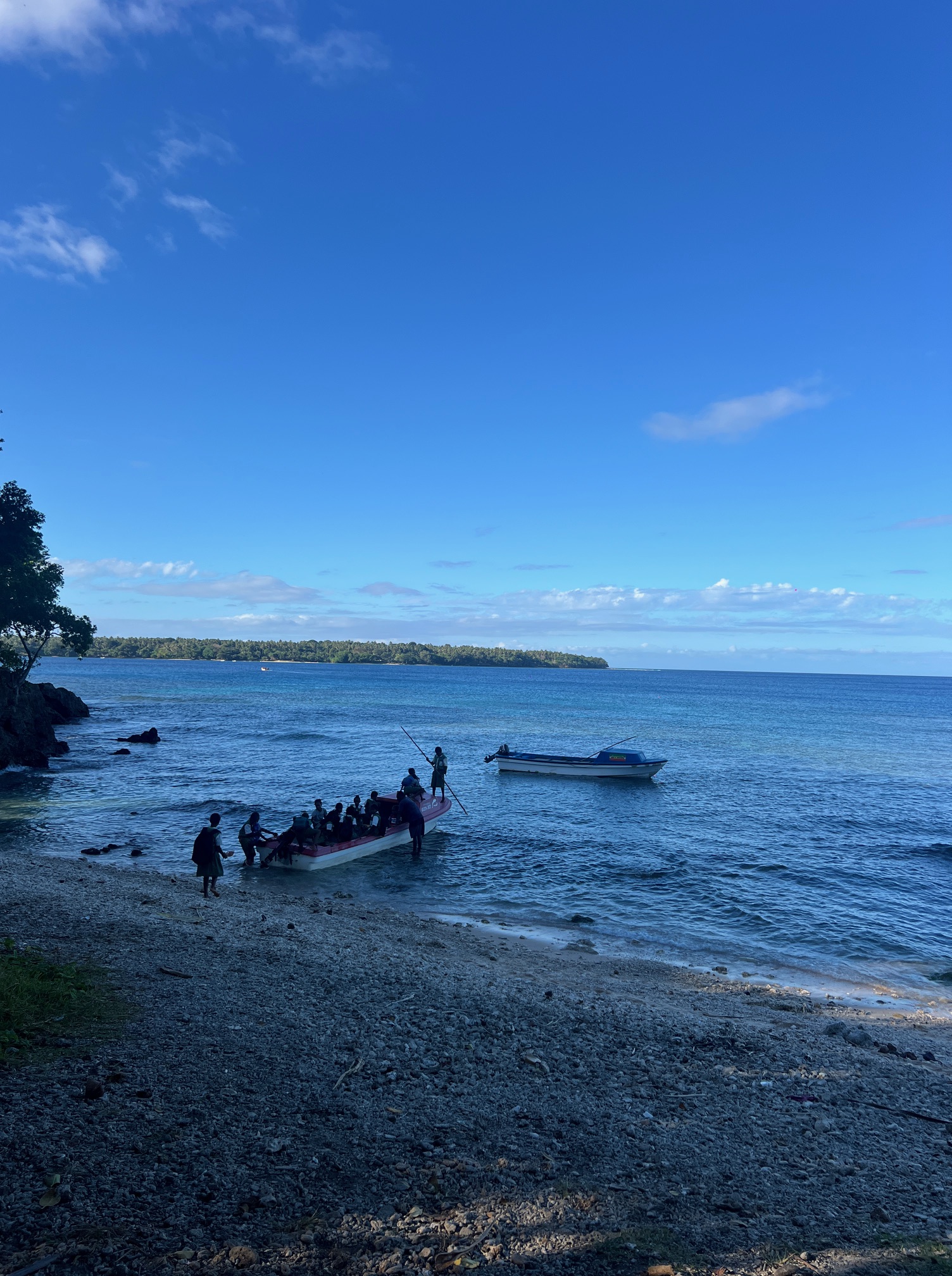
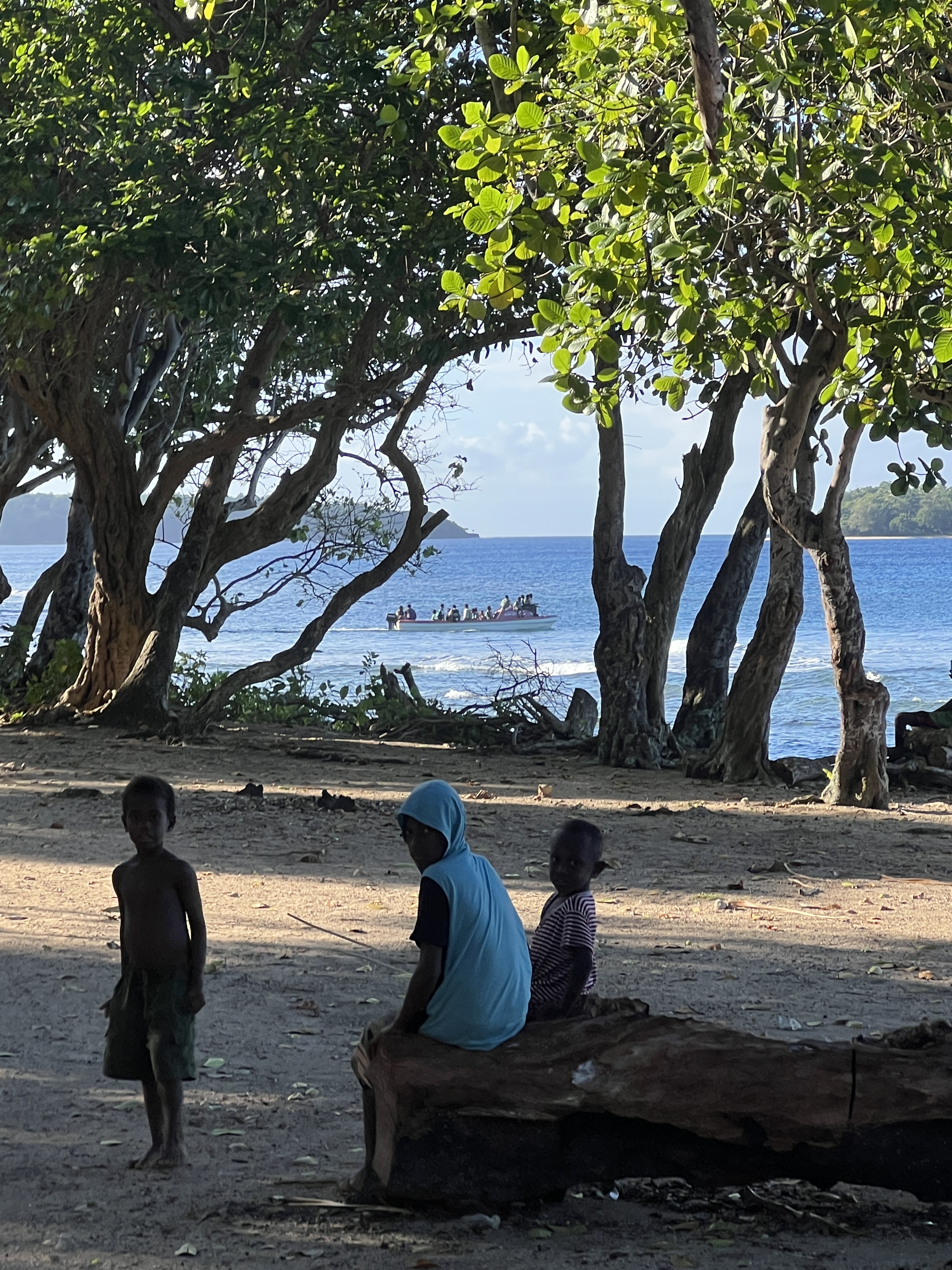
We grab our luggage off the wooden makeshift carts and load ourselves onto his truck – Sam in front and myself in the back with some of the local school kids from the French school. I’m told they don’t speak English, only their local languages, Bislama (the English-based creole language of Vanuatu) and French. So I practice my horrendously broken high-school French much to their amusement, only to find out after a little while of sideways glances and nervous giggles that they all in fact speak brilliant English, they are just shy.
Dropping our luggage at the accommodation before making our way to Roy’s farm is a significantly bumpy affair through crater-like potholes, giving a whole new meaning to the word ‘road’, bouncing around on the hard wooden boards of the makeshift schoolbus that is also Roy’s truck. The kids come down daily from Pinalum, other nearby villages and some outer islands to attend school in Norsup. School is important to them, a couple of the young boys tell me their favourite subject is English (I knew it), another young girl Maths, French, and several of them tell me they hope to be doctors when they grow up. They are smart and dedicated kids, and it really puts into perspective the lengths they go to learn. After what feels like an eternity, but is probably only about an hour, stopping along the way to pick up Lili (Roy’s wife) and supplies from the markets, drop kids off at various locations, and pick up some bottled water, we finally make it to Pinalum.

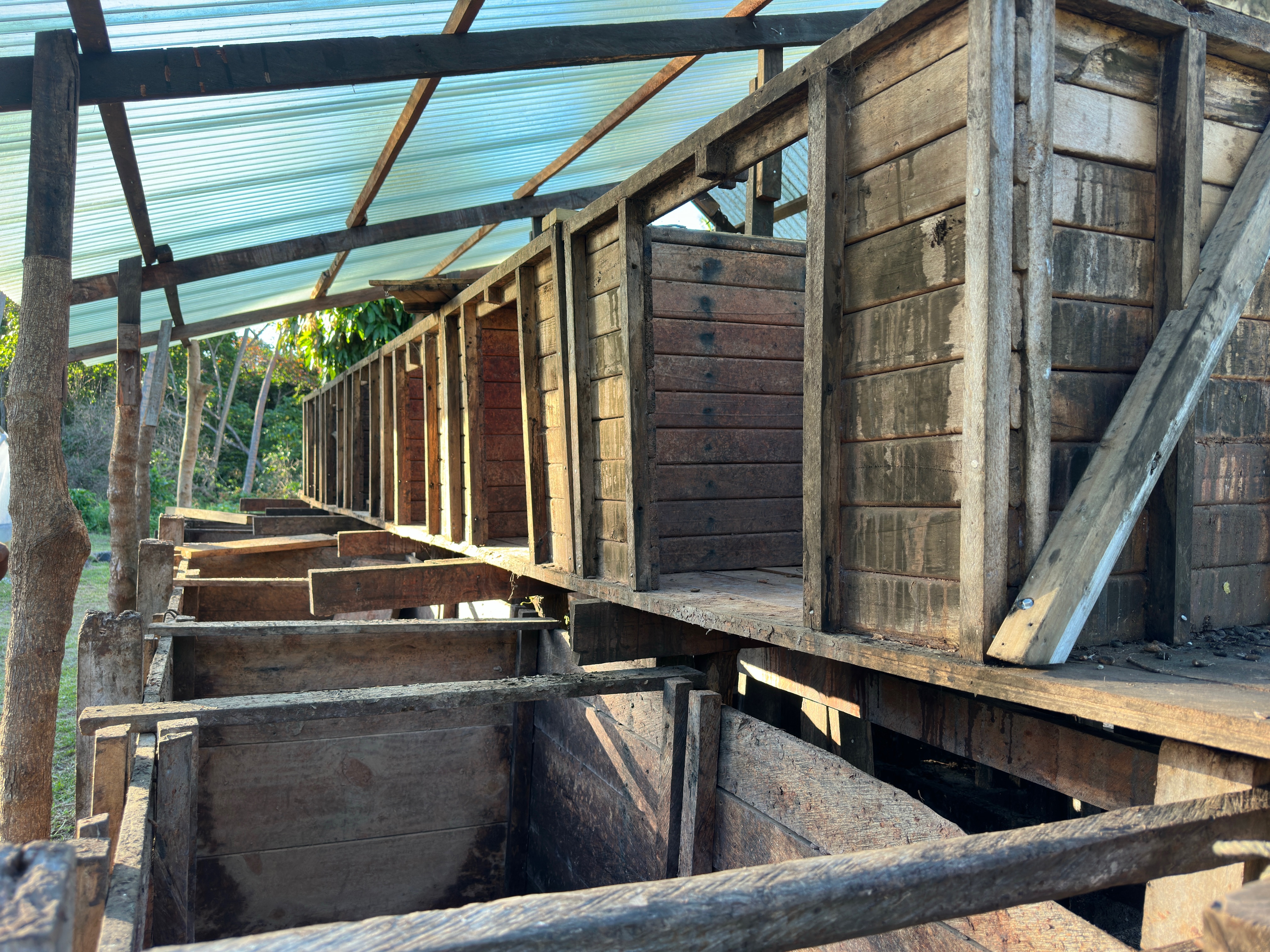
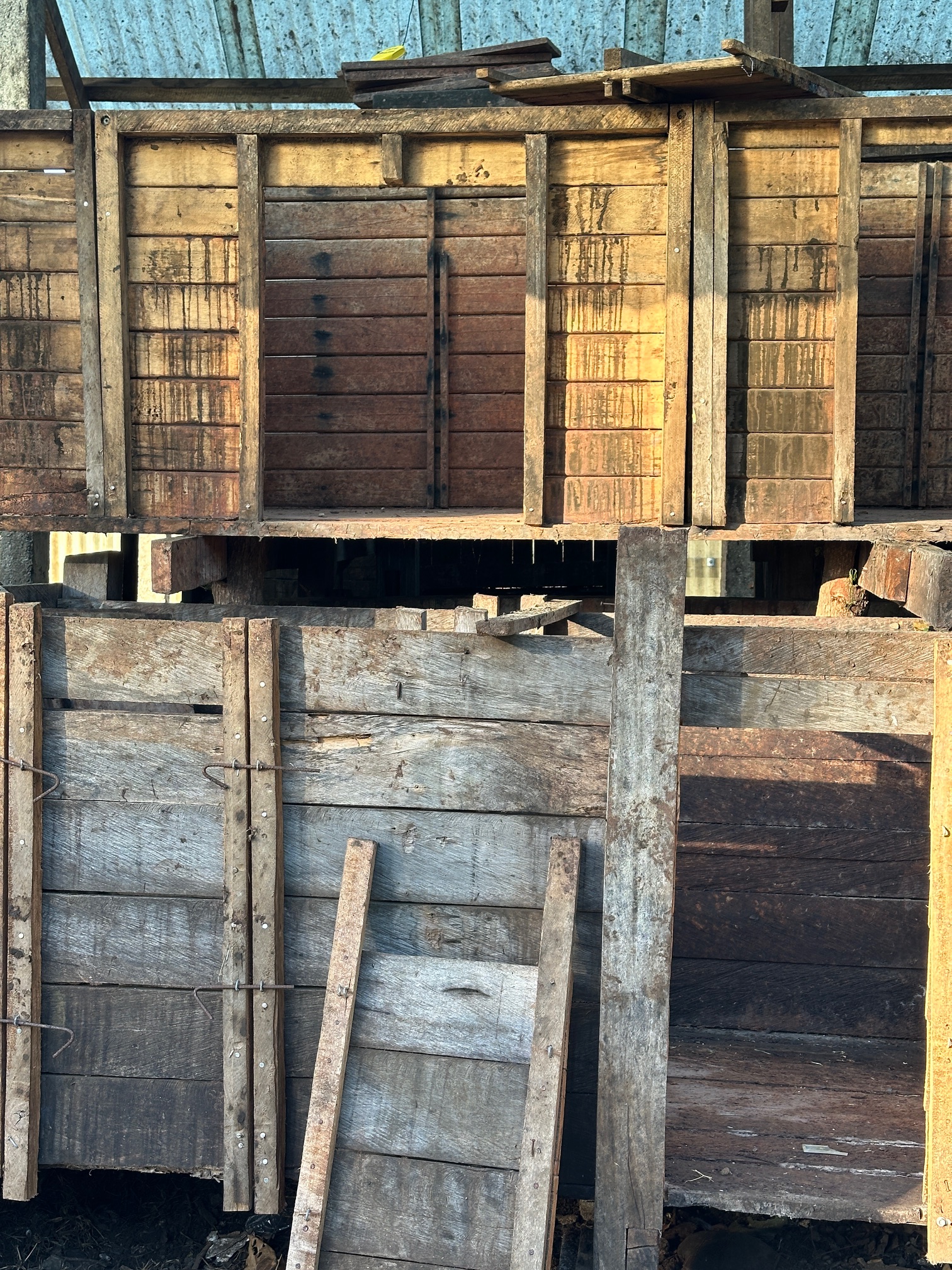
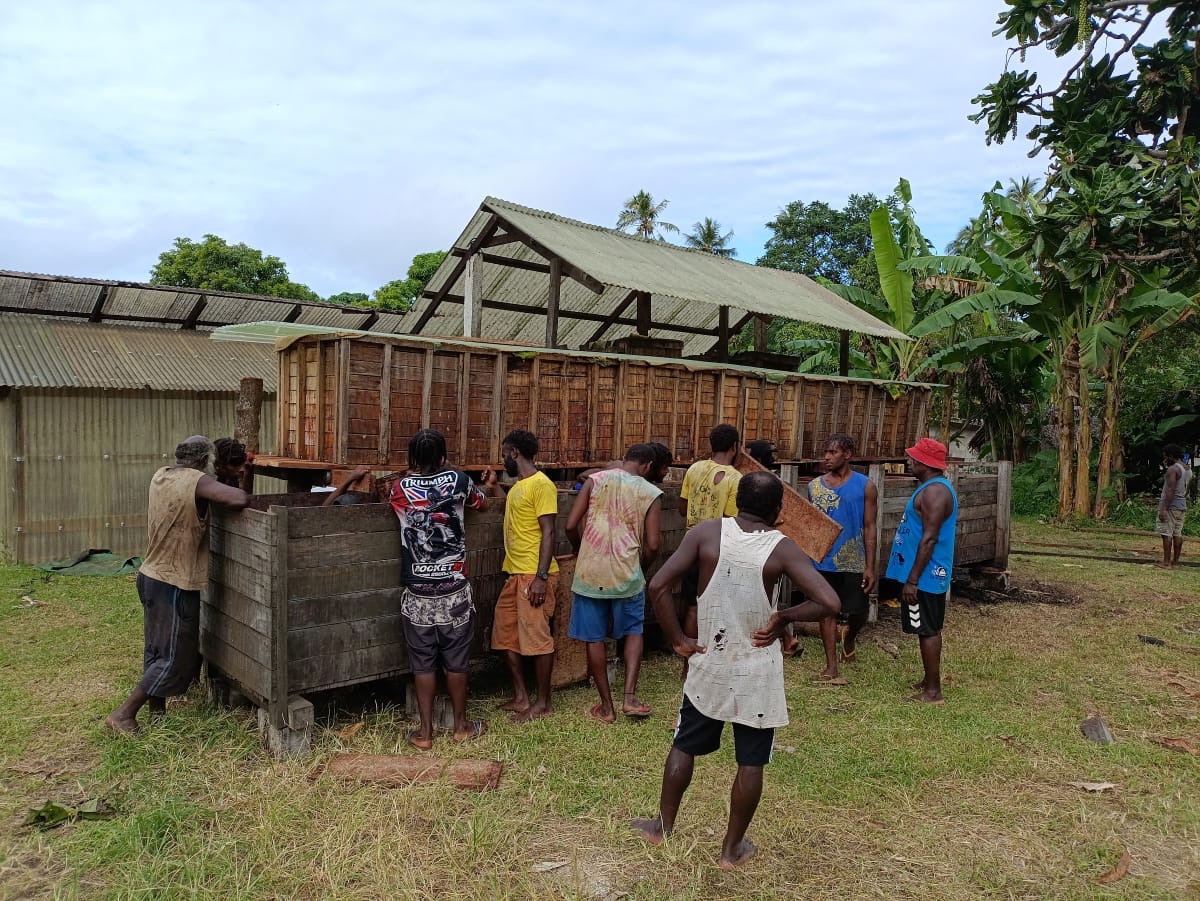
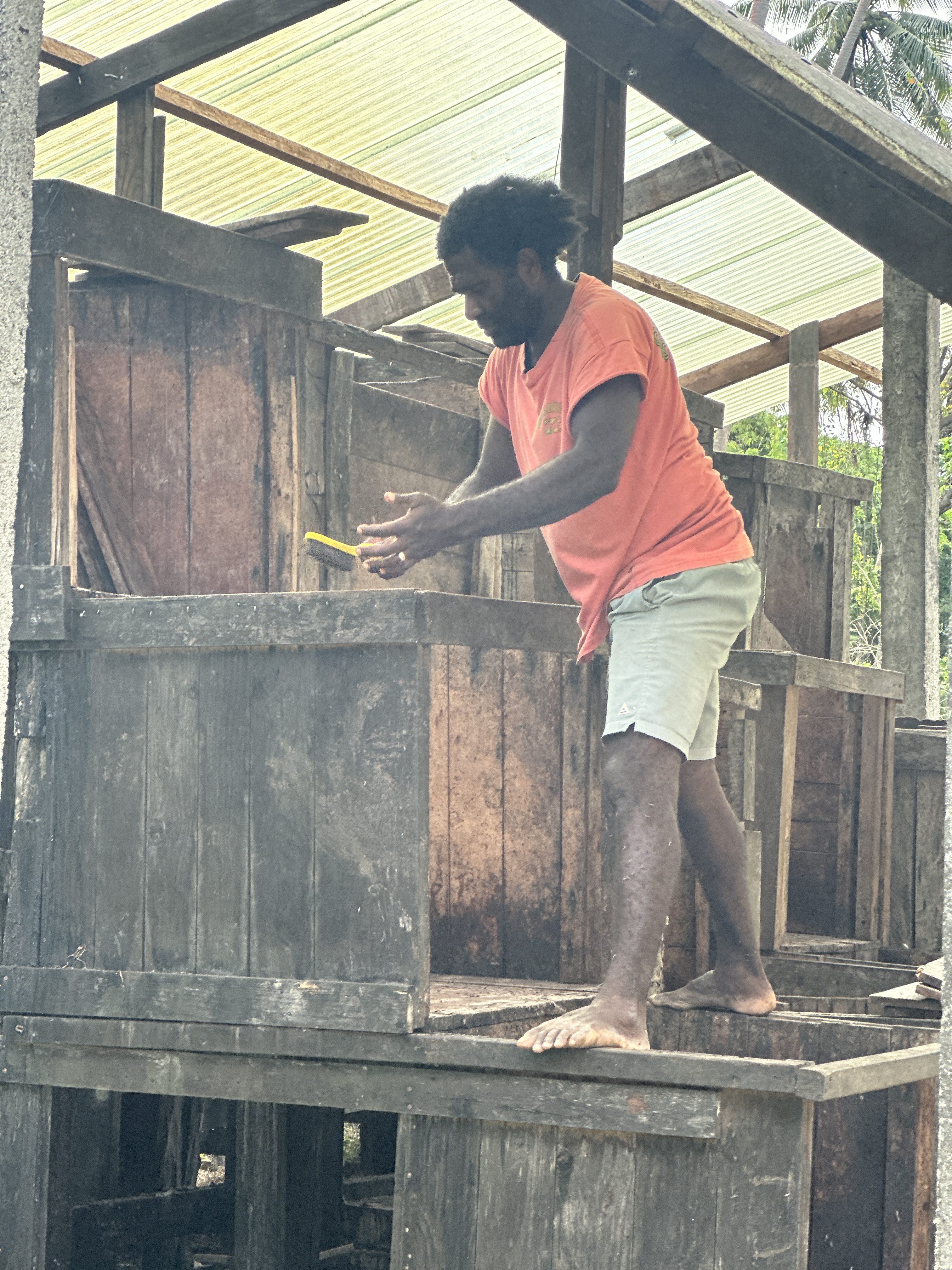
We briefly tour the farm before the sun sets and the bugs come out, visiting the drying houses, erected only last year, and three-tiered fermentation facility with it’s roof built by Roy and Oli. This we will be filling tomorrow with as close to 200kg of wet beans as we can from Roy’s and the surrounding farms. The Pinalum farms grow a strain Amelonado found in Vanuatu, an incredibly versatile bean that both Oli and Roy hope will help drive interest to this origin. Originally from Brazil yet introduced to the Pacific through German missionaries in the 1890s, Amelonado is widely considered to be the fourth ‘family’ of cacao – the three other most well known ones being Criollo, Forrastero, and Trinitario. Today, Amelonado is mainly grown in the Pacific and parts of Central America.
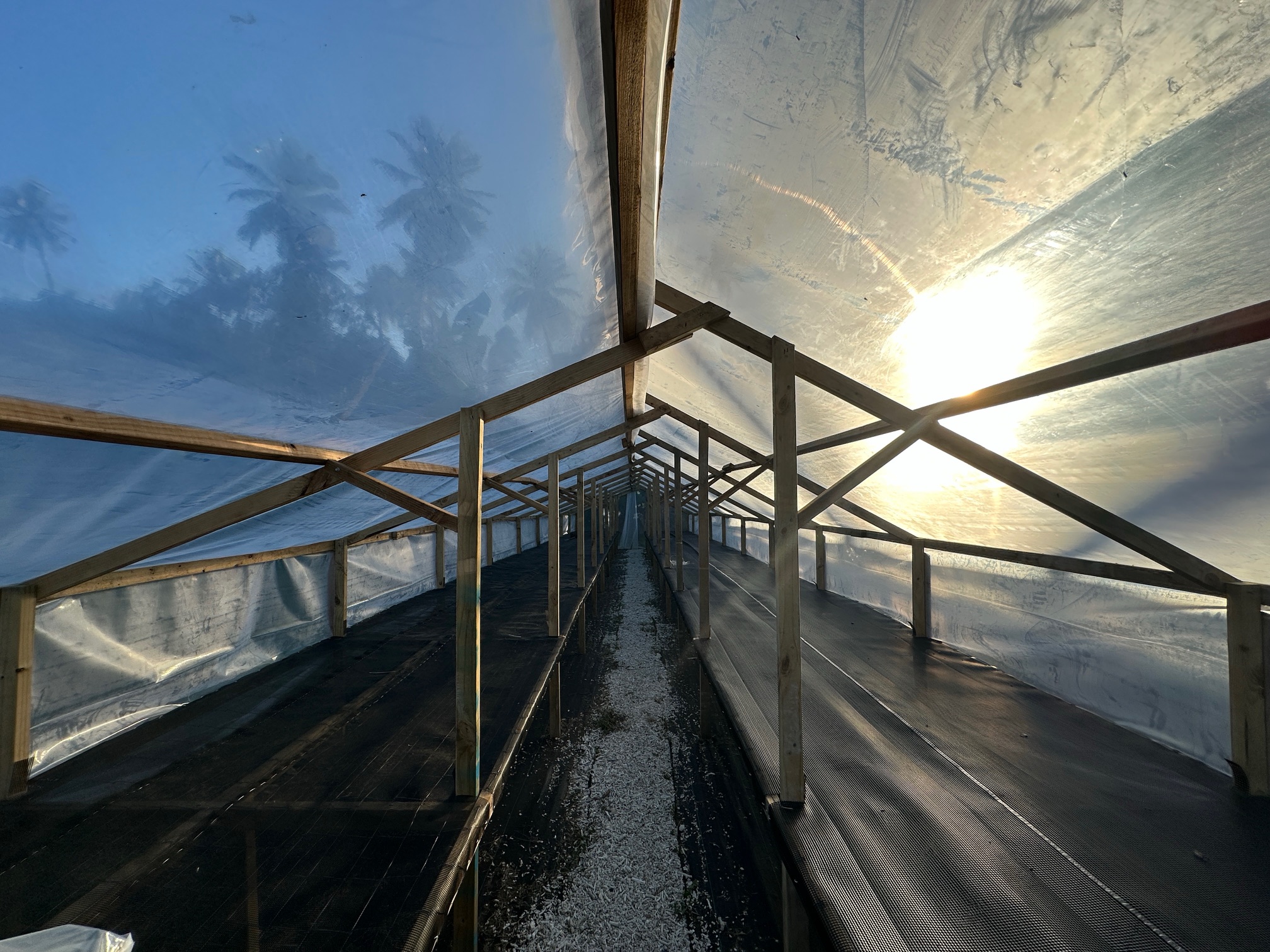
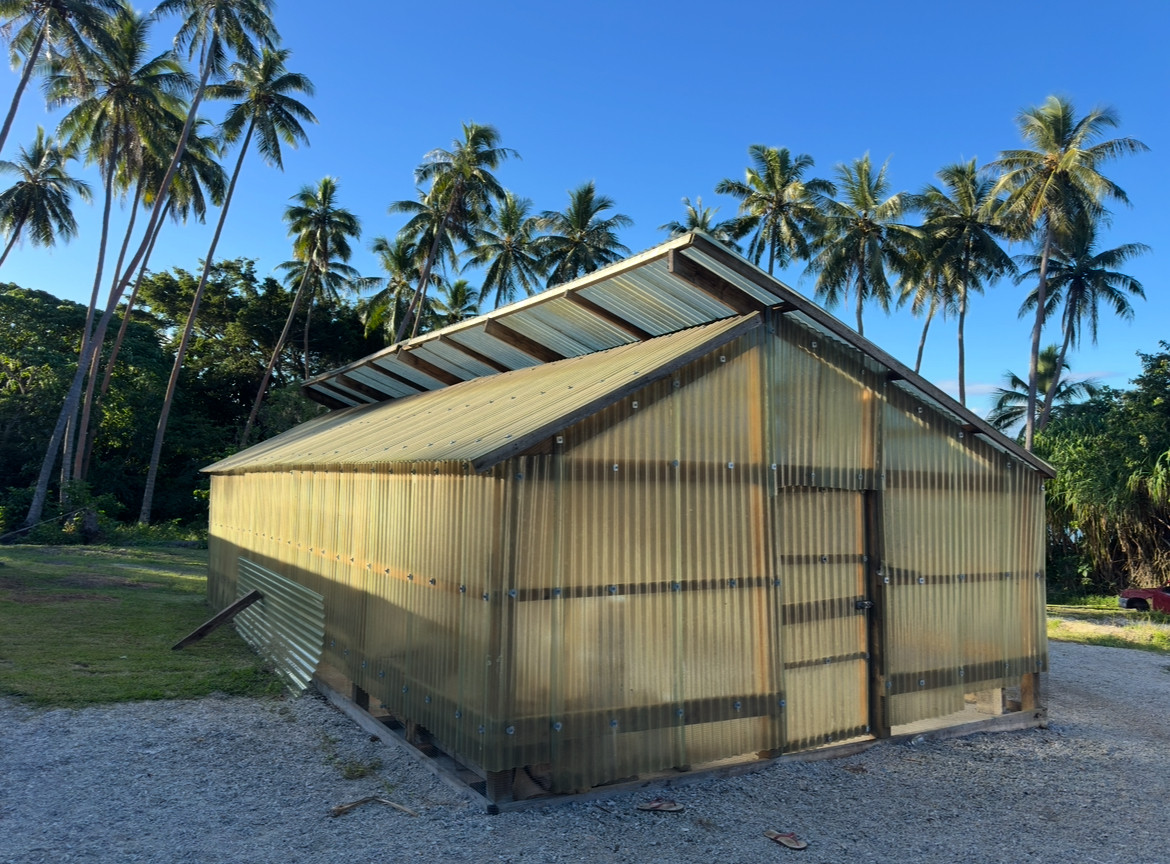
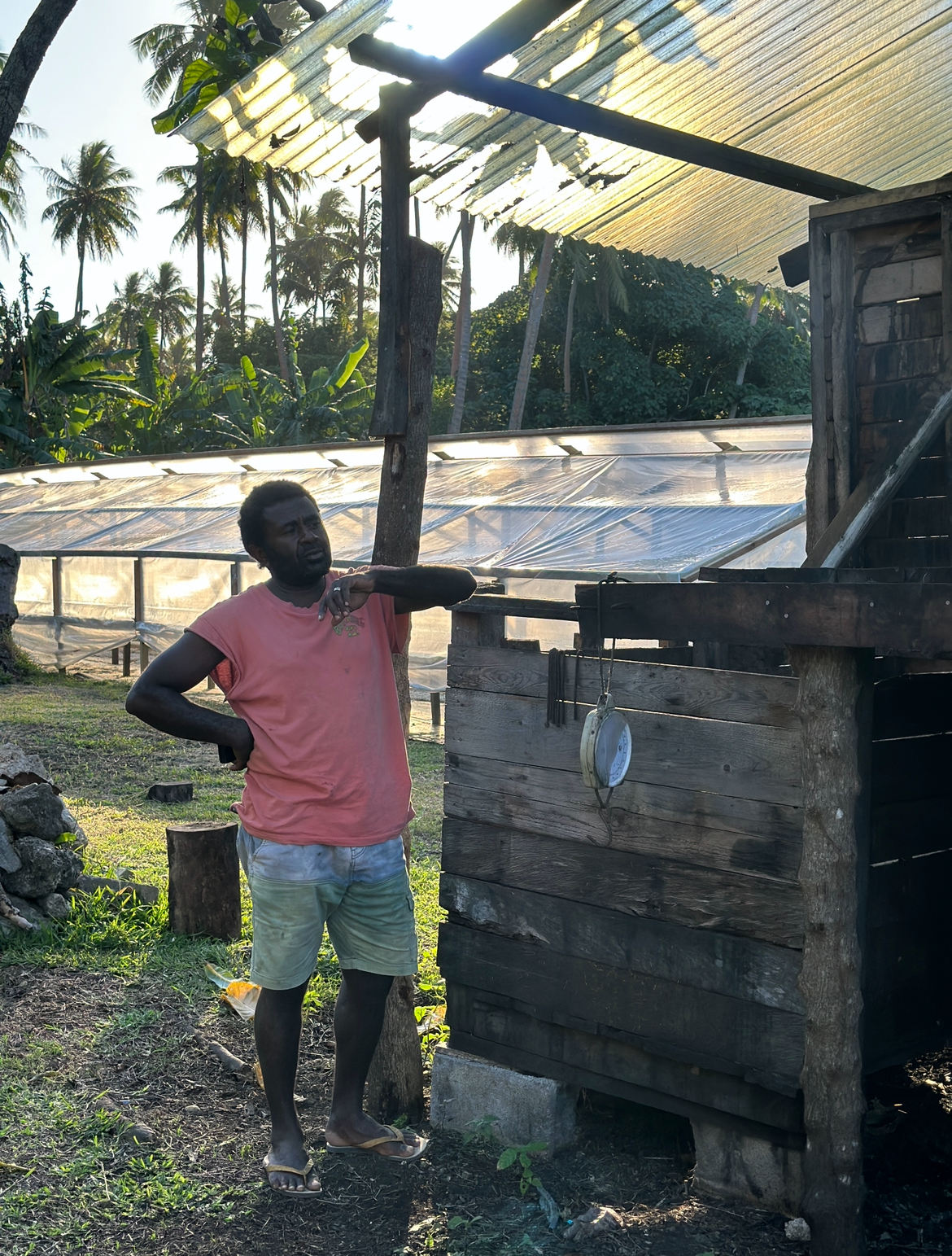
Roy and Lili have been together since 2007, and you can tell they are both deeply passionate about what they have created in this little pocket of paradise. Next morning Roy picks us up for a full day of harvest, explaining as we set off that the first harvest of 2025 was a challenge with them quite behind and low on their target due to slow ripening of the pods as a result of the unpredictable seasons. Frustrating for them since there is more than enough space in the fermentation facility and the drying shelter for a reasonable quota of beans.


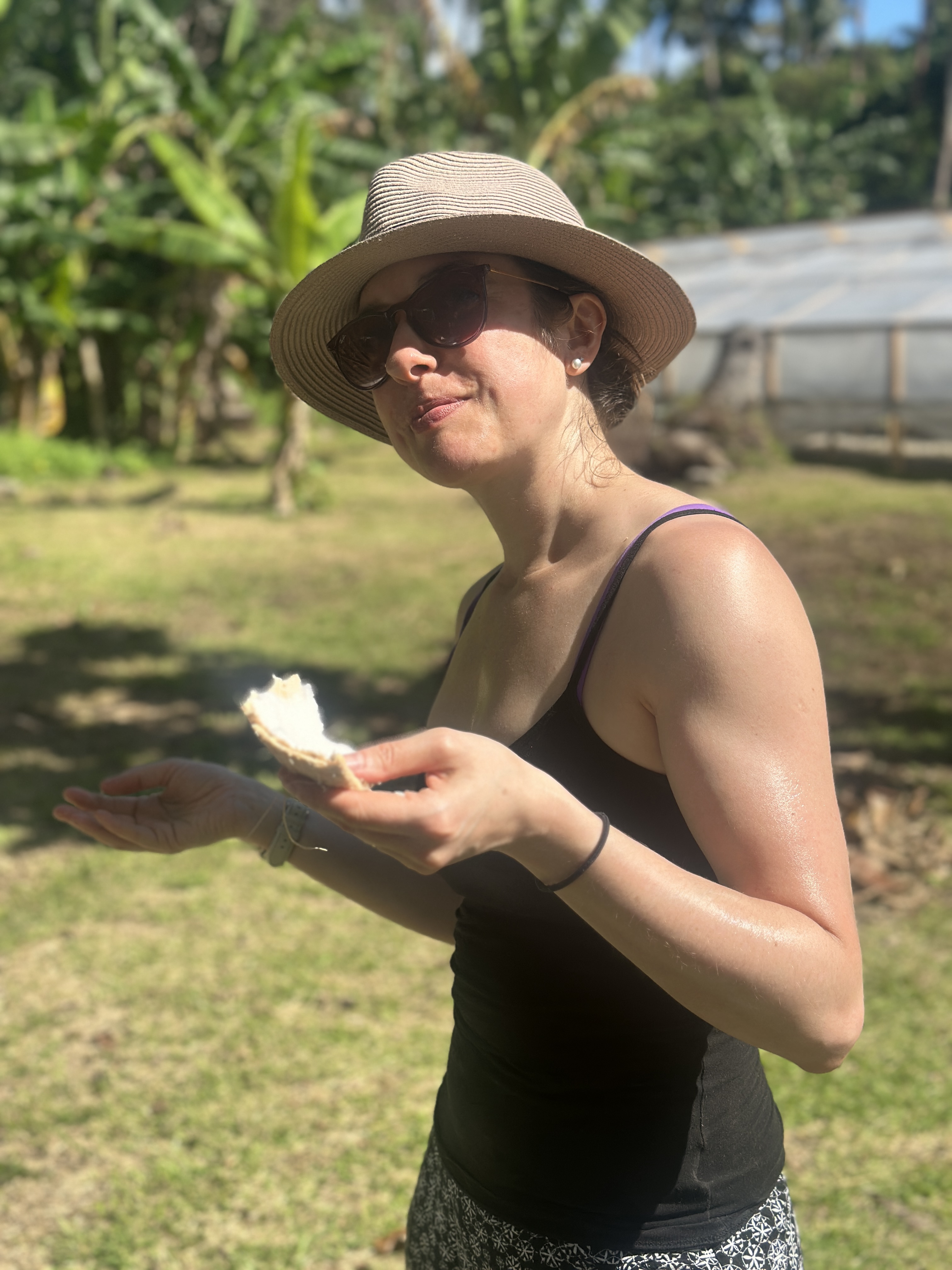
After a snack of fresh coconut we head deeper into the cacao forrest to discover Roy’s story. As a child Roy would help his brother, father and grandfather working the cacao here in Pinalum, he tells me back then they would dig a hole and ferment the cacao with banana leaves in the ground, much like the preparation for laplap (a traditional Vanuatu dish). That was his first experience, his earliest memory, of cacao. At this time no one on the island really had any idea of chocolate, only harvesting cacao beans, as Roy’s family did, to export. The main business and export for Malekula was (and still is) kava roots and coconuts. Back then cacao was not for making big money, he tells me, it was just another crop. Every time an export ship would arrive they would load the beans on, along with the kava and the coconuts and that was that, they would never see them again, and never try the finished product. It wasn’t until Roy and Lili started working with Gaston Chocolat and Oli that they started learning what could be made with cacao beans.
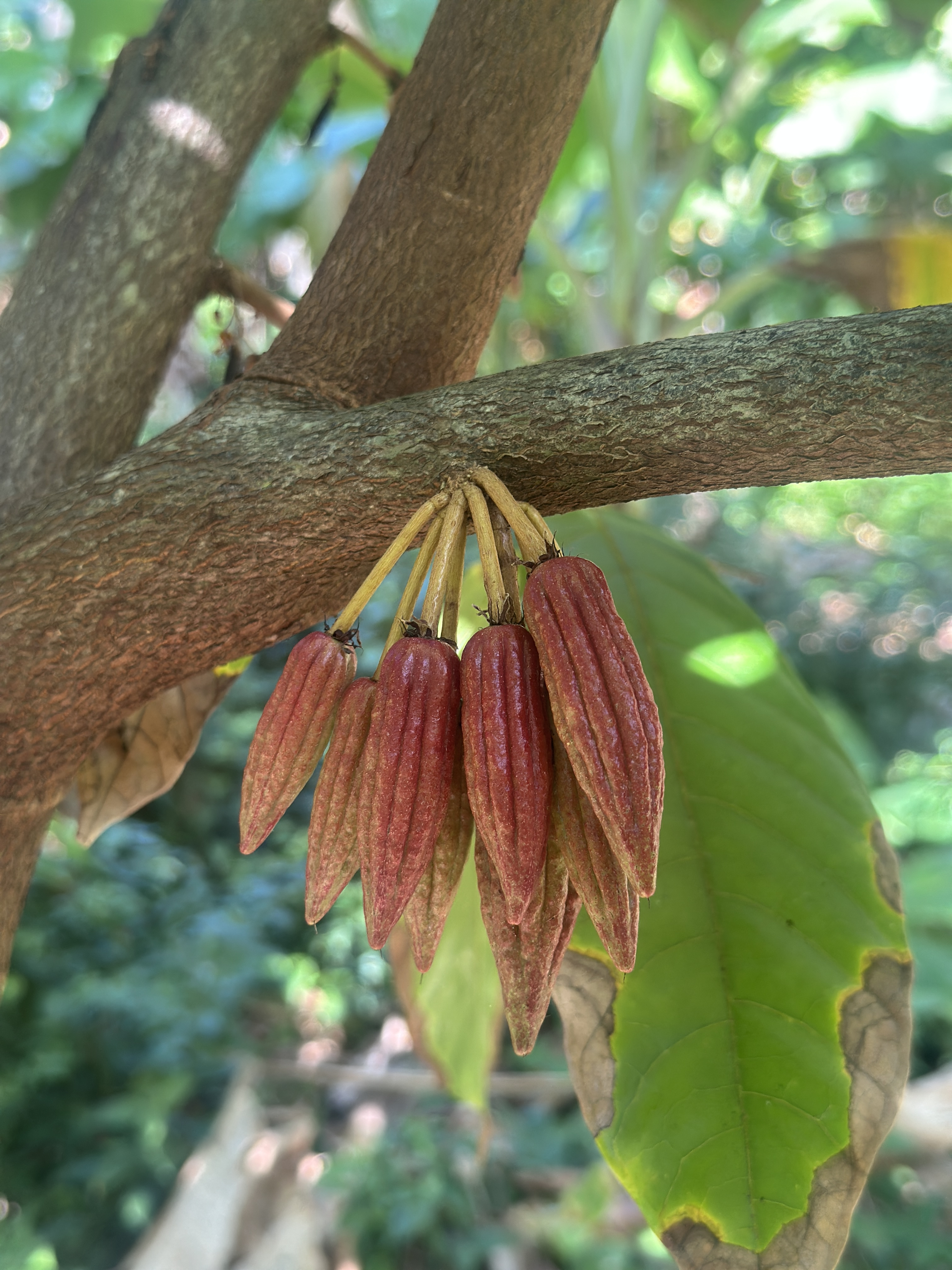


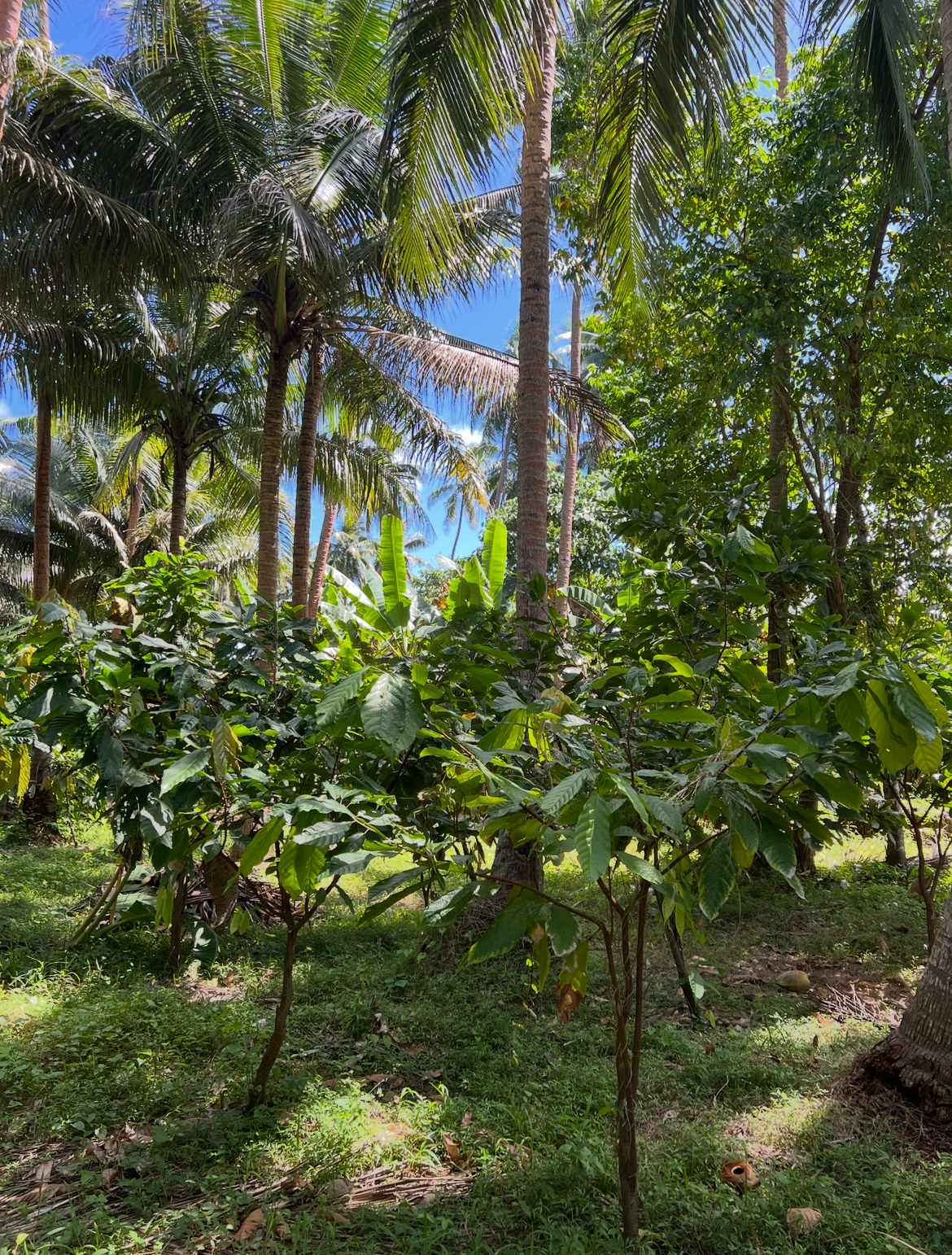
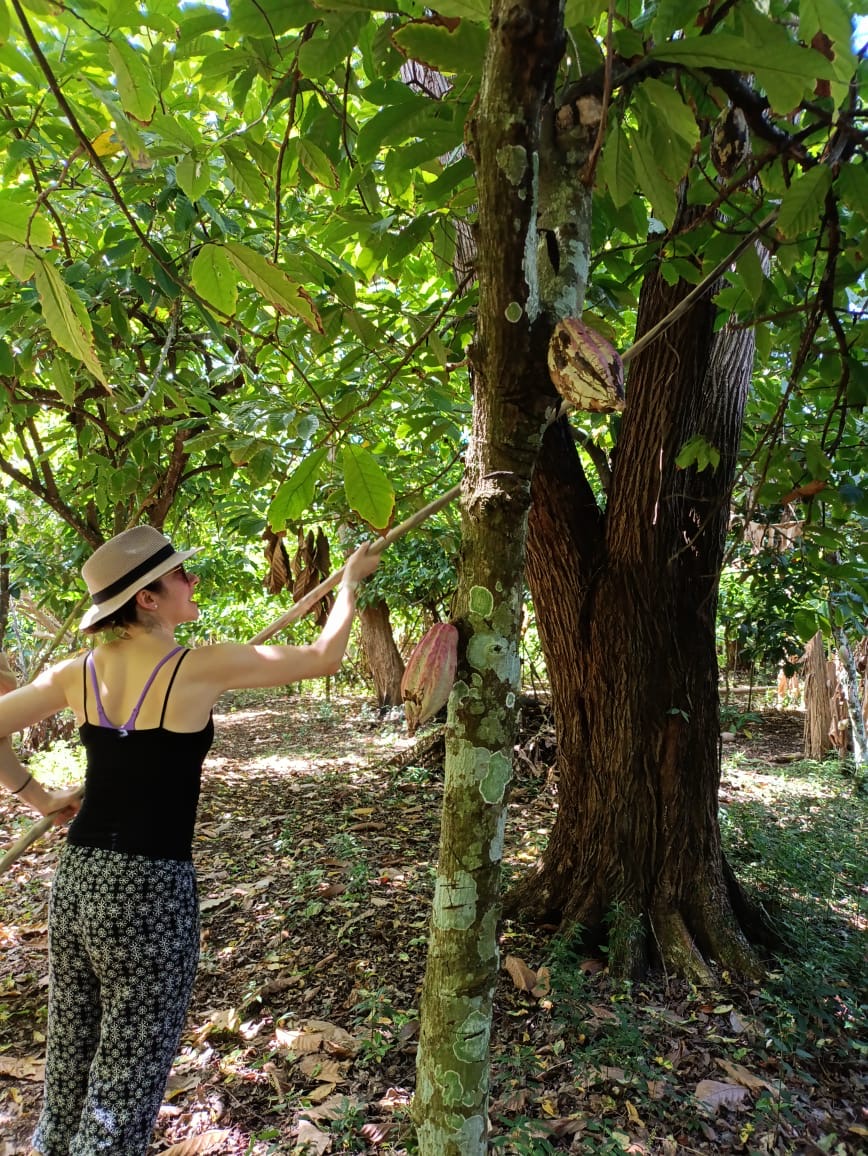
As we pick our way through the forest, machetes in hand, checking pods to assess their ripeness, nudging them from the trees with a flick of the machete, Roy tells us in 2015 many of his relatives were heading over to New Zealand and Australia to pick and pack fruits. Late 2017 he decided he would join, to send more money back to Lili now they had another child. By 2018 Roy was making his final preparations to head out to Australia for 9 months, and found himself in Port Vila for a few weeks in the lead up to his departure. One day a sign caught his eye “Chocolate making workshop” it read. This piqued his interest so he called and left a message, waiting outside the shop until it was open to enquire more. This was Oli’s shop, and when he comes to welcome new customers, Oli welcomes him in as well, and sets to work teaching Roy the basics of chocolate production once the customers have left – roasting, winnowing, refining, learning the whole process. At the end of the workshop Oli gifts him a couple of bars to try.


A few days passed, Oli calls to ask if Roy would like to come back and learn some more things. The first week passes quickly, and weeks slip into a whole month. Roy is faced with a dilemma, a big decision to make since his agent is calling him. Final preparations need to be made for his move to Australia – CVs need to be sent, visas and medicals need to be applied for and received. Unsure what to do he calls Lili, who calmly suggests that it is best to cancel the Australia trip, sit back and stay at Gaston. One month quickly turned into six, and in that time the two friends had bought more machinery, built a new kitchen, laid a new floor, building up Gaston from scratch. By the end of 2018 Roy was making chocolate alongside Oli, selling the chocolate, and educating customers. Word was spreading, of amazing chocolate made in Vanuatu from Vanuatu beans. All the popularity was challenging at times, so two staff were hired – a manager and an assistant. For the manager role they decided on a young girl with a strong work ethic who started the next day. The assistant was someone very close to Roy he explains, welling up with pride as he tells us his own 16 year old son joined as an apprentice for one year on days and times when he was not at school. Eagerly learning everything about the business from making the bars, distribution, and more.
Roy and Lili began exploring making chocolate with their own Pinalum beans, and set about discussing with family and neighbours, making a fermentation box to ferment the cacao out of the ground. They produced one bag this way, and Oli was immediately keen, sorting a ship from Malekula to Port Vila for the beans. After the success of the first bag, and running tests on the beans, Roy and Lili soon started collecting all the beans they could from their own and the surrounding farms. Oli was paying up front as often as he could for Roy to pay the farmers to get as many beans as possible out of Pinalum, but sometimes there were more farmers and beans coming than Oli or Roy could afford to keep up with, given the good price he was paying for the beans. So Oli agreed to pay an advance, with the balance due on receipt of the beans.
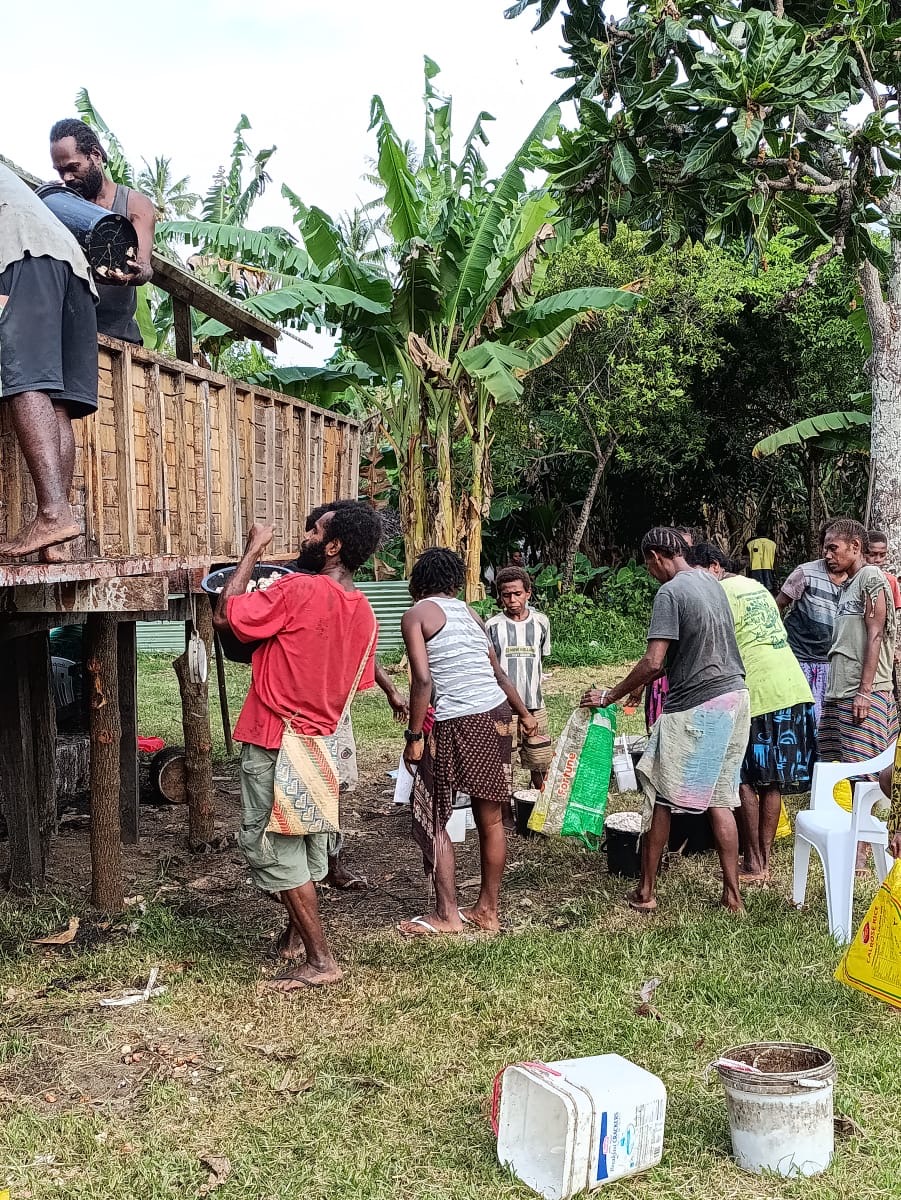


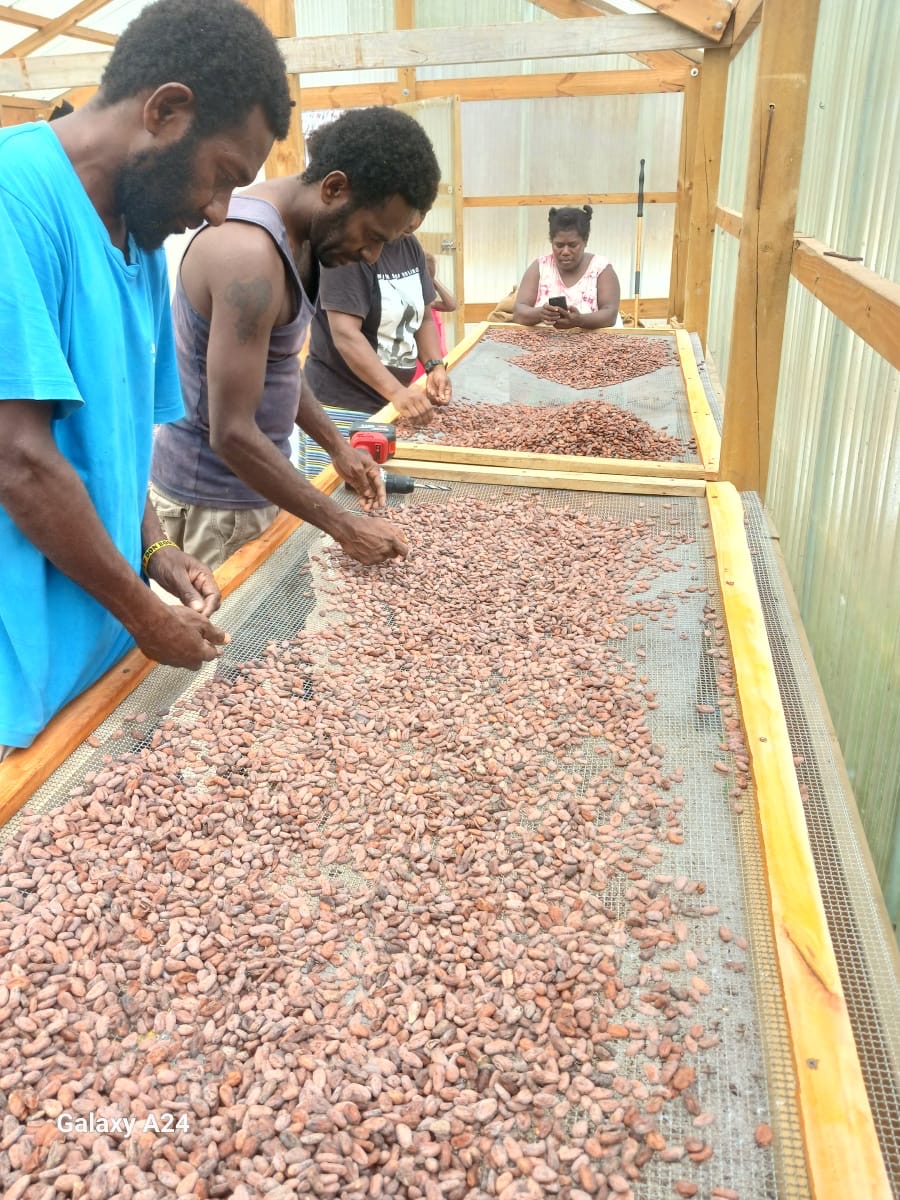
The partnership blossomed, and the two friends soon hatched a plan, setting up an association for the farmers. Things worked smoothly for a time, Lili staying in Malekula with the farmers and running the association, Roy and Oli attending meetings around Vanuatu, continuing to work on improvements, and in the factory in Port Vila. Until March 2020 and the world was thrown into lockdown, which separated Roy and Lili for a significant period of time, on different islands within their own country. Yet farmers continued coming with cacao even during COVID, following all the stipulated safety measures, to ensure the crop did not waste. Roy, Lili and Oli’s focus on supporting the local community through an exceptionally hard economic time just shows their dedication and commitment to the local farmers, and confirming the ongoing viability of cacao as a mainstay income generator for Malekula. Once lockdowns were lifted Lili joined Roy in Port Vila at Gaston.
By 2019 the Port Vila factory had moved to a bigger premises, yet with a bigger store came the demand for more staff – along came Christie, Marie, Susie, then after COVID, Lili and Sam as well – growing the Gaston Chocolat family to seven members, surviving through the pandemic with much laughter and good times. Until the December 2024 earthquake that killed 14 people, injured 265 and devastated a significant part of Port Vila – including Gaston. For a period of time only Oli, Roy, Lili and Marie remained, until two new recruits joined in early 2025 to set about building a new factory, putting the machines back in. By sheer dedication, everything was successfully restocked in time for Easter, and as luck would have it, just in time for next harvest season. So Roy and Lili headed home, returning with two containers of beans.
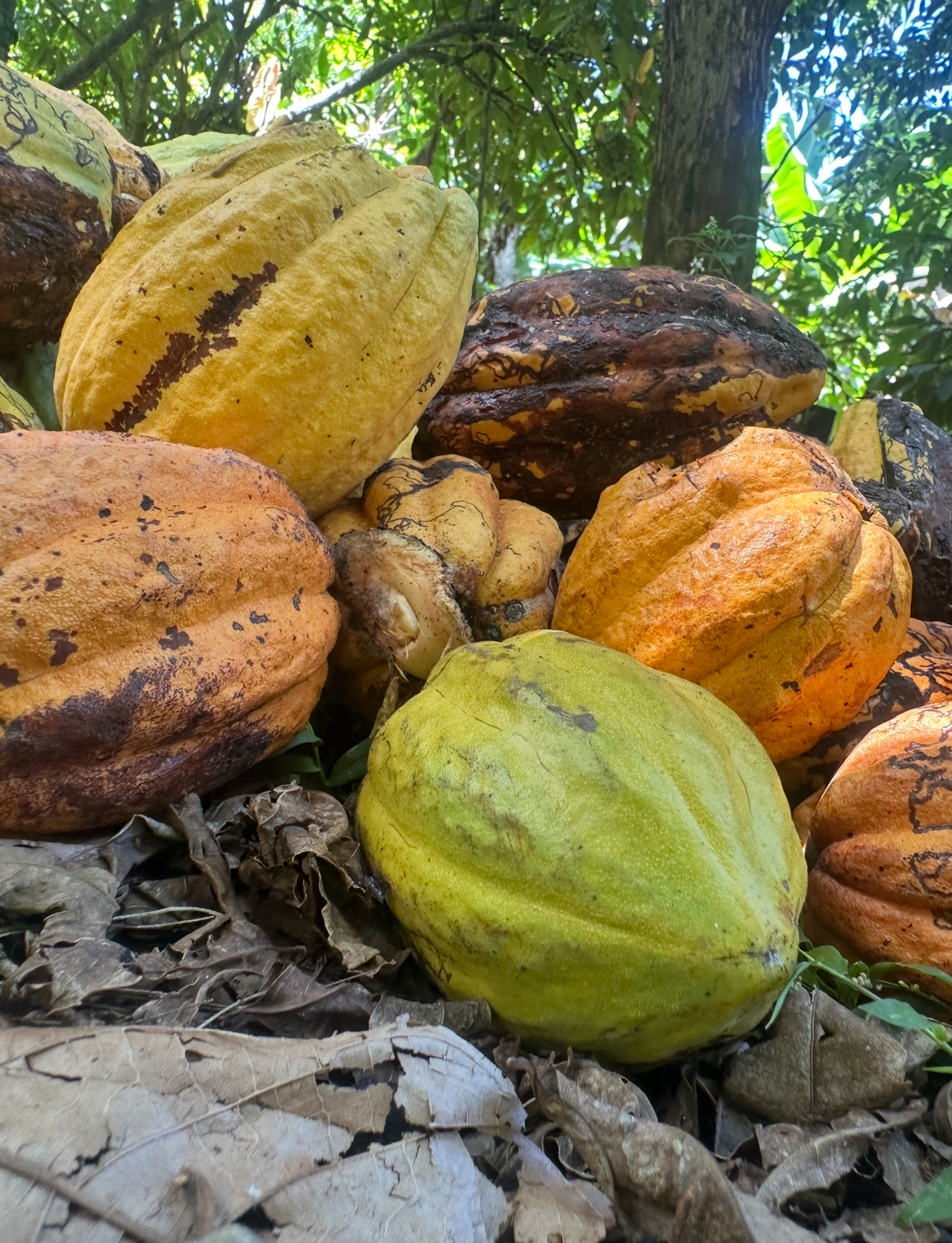
Since then, Roy excitedly tells me as we hunt for more of the golden and ruby orbs of ripe cacao pods, they have had their first export to Canada, and Hawai’i, and this year alone received many visitors to Pinalum; Daniel from Cacao Services Inc, then Thomas of Coromandel Chocolate, and now Sam and I. The people of Pinalum are beginning to notice all these visitors, and more people coming means more exposure, better economy, more growers, better processes and foundations. All of this presents opportunities for investment back into the farmers and the future. Now even some of the kids have plans to work on the farms one day. It’s not just the farmers seeing the investment, Roy and Lili are incredibly proud that they and Gaston Chocolat sponsored 100,000VT (vatu) to the Pinalum football team for Yumi 45 – celebrating 45 years of Vanuatu’s independence.
Reminiscing, with a far off look in his eyes, Roy tells me “I never did go to Australia to pick the fruit. And sometimes I talk to Oli about it and we agree that going to Australia is a waste of time, when chocolate finds you it’s when you least expect it.” I think it’s safe to say he’s probably right.
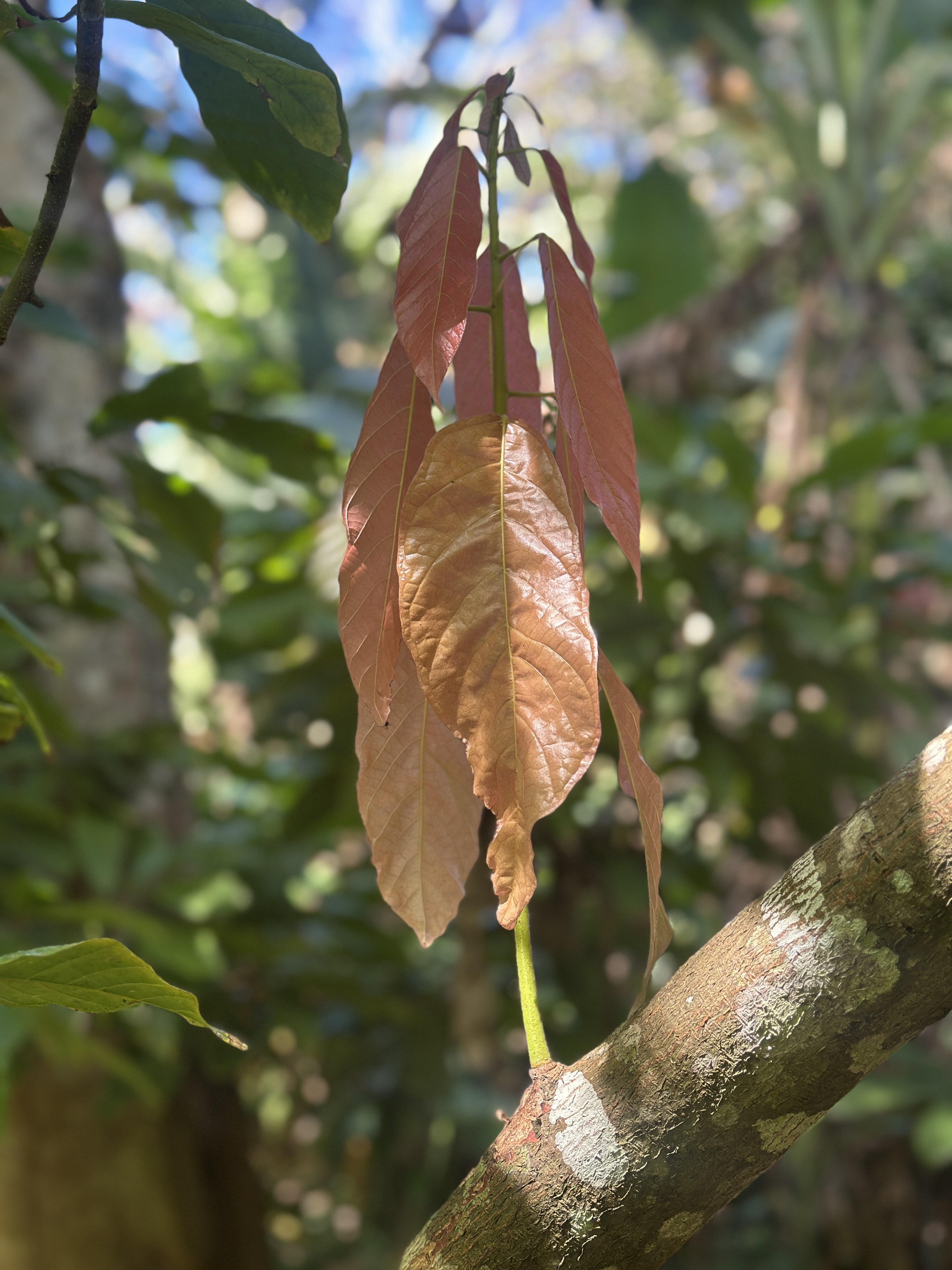

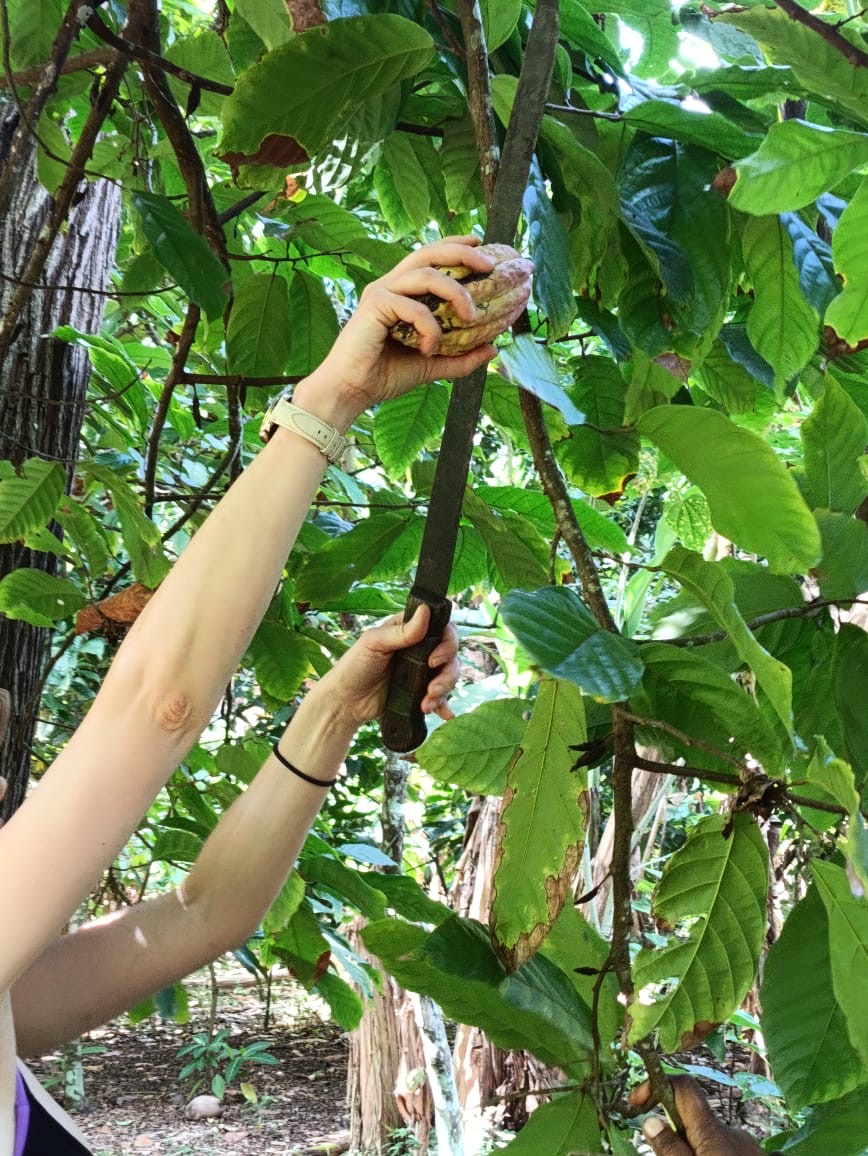
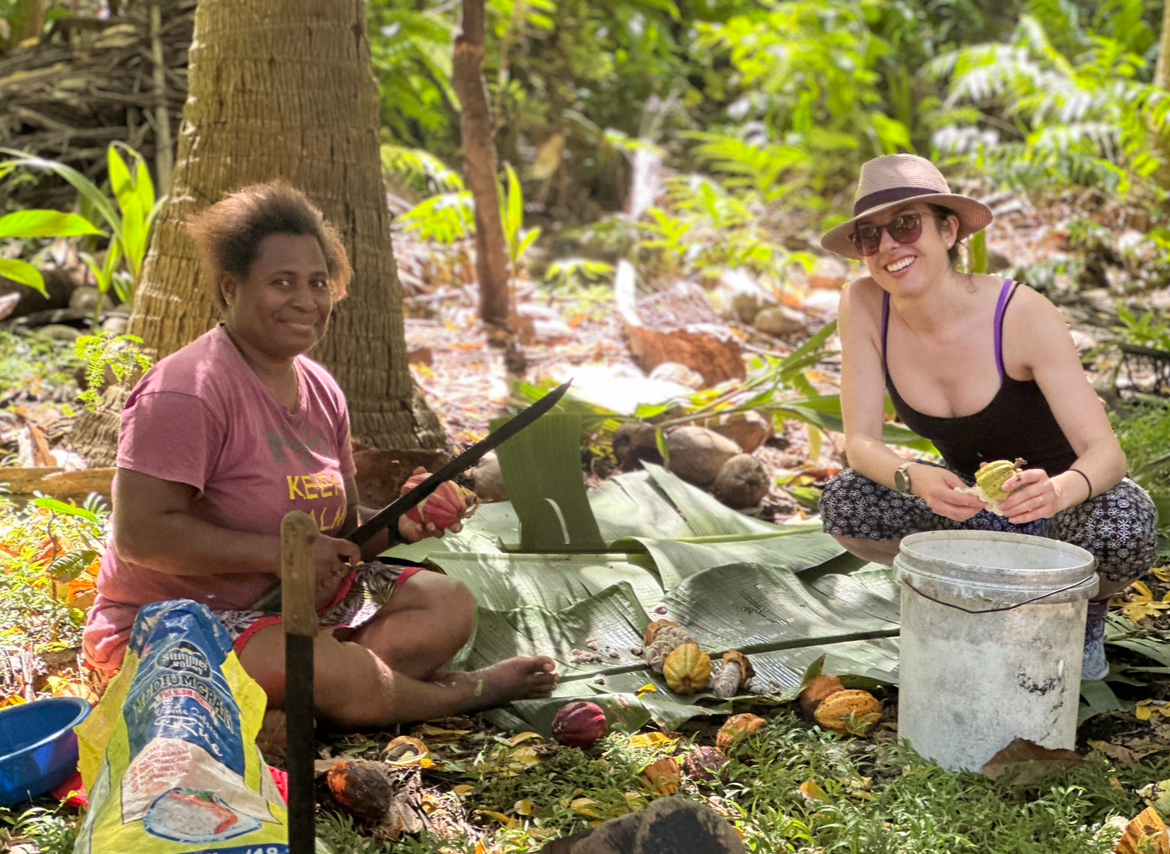
It’s been many hours gathering pods now, tapping countless number of them out of the trees, Lili deftly cracking them open with one tap and twist of the machete before we scoop out the seeds and pulp into buckets. We’ve learnt so much of Roy and Lilly’s journey, over many a coconut apple snack as we assess our cacao. We lug our buckets back to the farm and weigh in at 24kg, several other farmers also join and we make our 200kg quota. After a delicious laplap dinner prepared by Lili, and a final trip to the nakamal, they kindly drop us back to our Norsup accommodation. We say our goodbyes, knowing we’ll see them in Port Vila in a few days.




Sam and I now had time to explore a little more of Malekula. We had heard rumours of dugongs (sea cows) frequenting the seagrass meadows not too far from Norsup. We set off for a lovely day on the water, our amazing host Oreli of Nabelchel Bungalows joining our quest. Part way through our relaxing snorkelling trip we discover Air Vanuatu has moved our return flight by several days. This wouldn’t be so bad as we loved the magic of Malekula, but we had pre-booked plans on Efate. Unable to even charter another flight off the island for several days, Roy comes to our rescue and we join him, Lili and some cacao beans on the ferry back to Port Vila.



It’s all a little hectic and a bit of a rush getting to and on the boat, a melé of kava roots, coconuts, live roosters, one sack of cacao beans, and a large pig in an intricately constructed wooden crate carved of thick branches nailed together. The name ‘Bruno’ is etched into one of the branches and inked in. Whether the pig himself was named Bruno, he was from someone named Bruno, or for someone named Bruno I will never know, but for the purposes of the rest of this story, we shall call him ‘Bruno’.

The boat spends another 2 hours sorting flour and rice it had delivered to Malekula, so we settle down with Roy and Lili on their woven flax mat for the evening. The warmth, generosity and joy of ni-Vanuatu shown everywhere across the country never ceases to amaze me. Everyone really is just happy, and happy to help one another. Even on a delayed, packed ship with a 12 hour journey ahead, everyone is chatty, friendly and just full of so many smiles and laughter. I think Western society and culture can learn a thing or two from the ni-Vanuatu and their approach to life.

I’m woken by a sharp jolt against the side of the ship that alerts Bruno in his wooden crate down in the bowels of the ship, he emits a couple of shocked squeals which subsequently sets off the roosters – it’s 2.30am and the rest of the ship is sound asleep, the air thick with the hum of slumber. I doze some more, tossing and turning amongst my nest of food bag, backpack, water bottle and towel I have constructed to form some semblance of a bed. The sea is rougher out in the open ocean (despite the fact Roy reassured us this is a calm crossing). Another jolt around 4am startles a small child who’d been crying earlier on the crossing, his mother calms him and to my surprise the dulcet tones of ‘Baby Shark’ now echo through cavernous belly of the ship. It’s at this point I realise there is no more sleep to be had, and head up to the top deck to get some air. I’m greeted with nods and broad grins from those sleeping in the balmy air – significantly warmer than the extremely air conditioned belly of the boat.
Entering the serene harbour of Port Vila a few hours later, we pass fishing boats heading out for a day on the water, greeting us with smiles and big waving gestures as they cut through the aquamarine water, the lush green hills framing behind them.

Docking in Port Vila is just as slow as leaving Litslits on Malekula, and slightly more hectic – mainly because our luggage (including dive masks and fins) left in the bowels of the boat went off to the produce depo and tax office – along with the kava, coconuts, cacao beans, roosters and Bruno the pig. Once duties were paid we are packed once again onto the back of a truck – Oli’s this time – and make our way to the Gaston factory. While getting a ship for 12 hours from one island to the next wasn’t a planned part of our two week Vanuatu trip, it certainly brought a unique level of insight into the journey of cacao in the Pacific. Not just the length of the journey, but also the significant effort people in this part of the cacao supply chain go to to get fine flavour cacao beans from origin out to the wider world, and I for one, am so glad they do.
——-
The title for this article is an interesting one for sure, after one of the many nights at the Nakamal in Pinalum, Roy tells us of the story of Pinalum, and that it is actually spelled Pimalum, meaning ‘peace’ in Nale – Roy’s traditional language. Showing that both peace and chocolate can be found together.
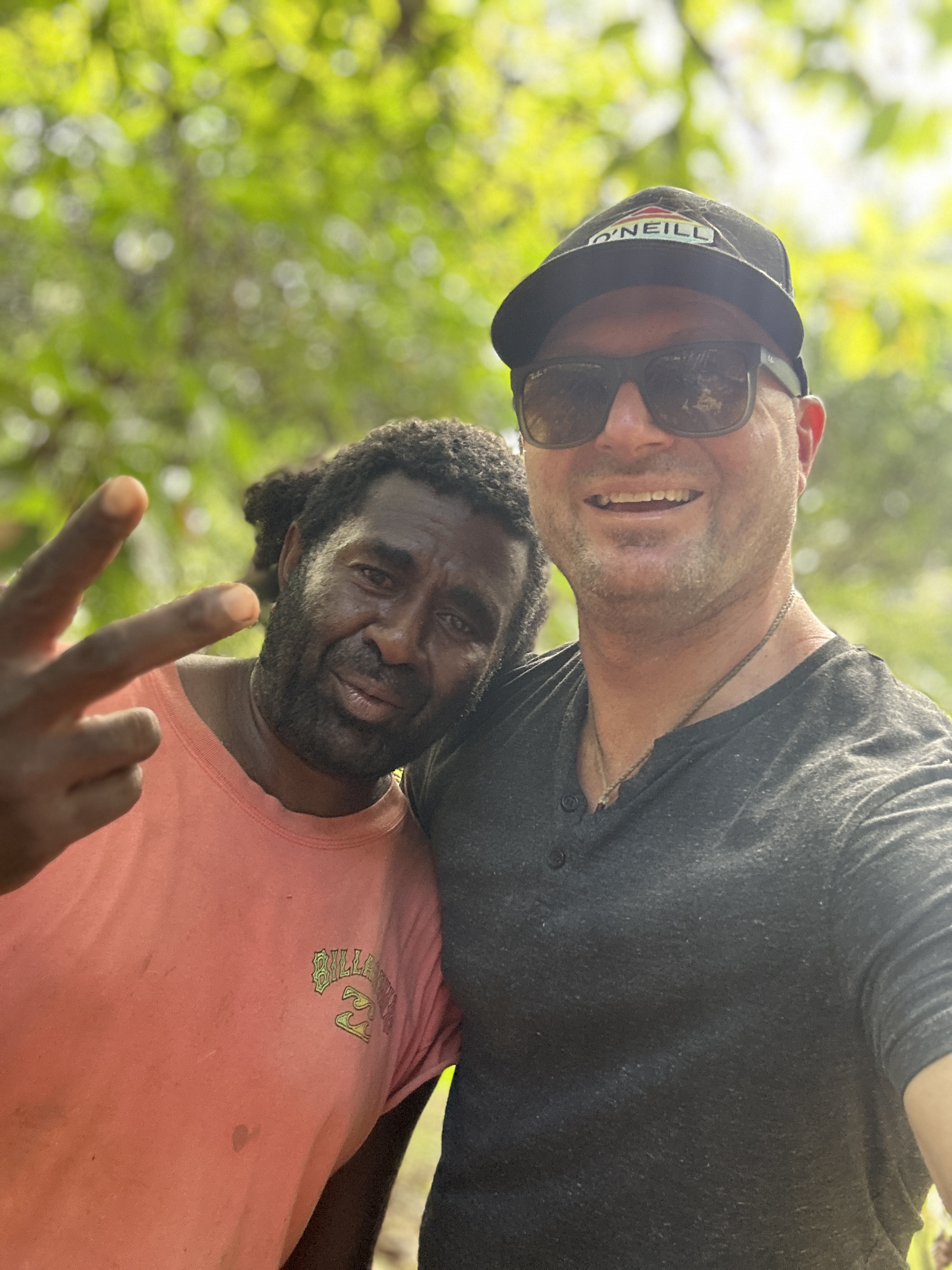
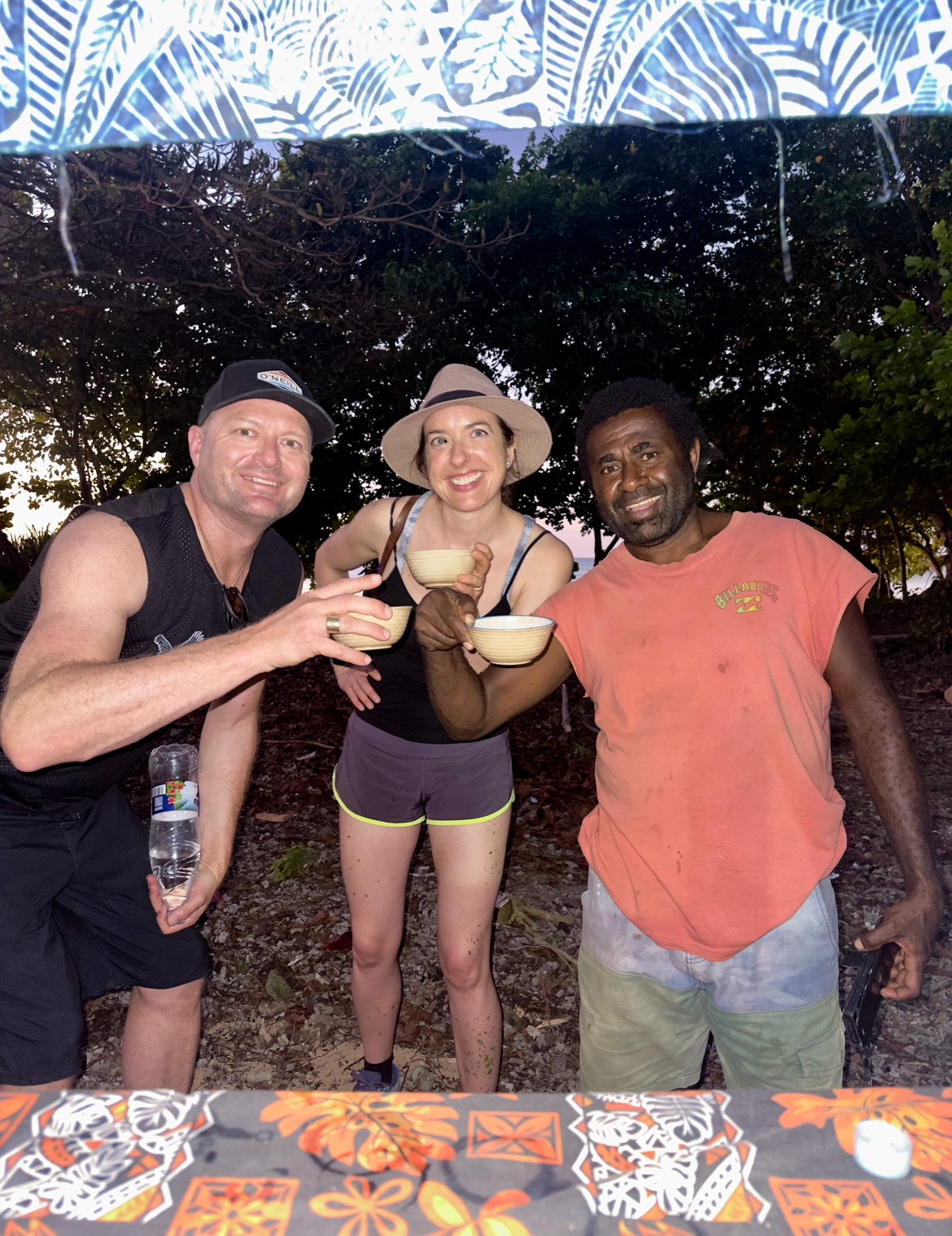
Cheers to Roy and Lili for an amazing experience and sharing a piece of cacao paradise with us.

 The Adventures of Elle Coco