
The smell hits you before the door has even closed behind you. Rich, deep, intoxicating, that unmistakable aroma of cacao being ground into something truly magical. It’s a grey Wellington morning on Adelaide Road in Berhampore, and there is a distinct bite and sprinkling of rain in the air. A typical spring day. But I’m not phased, I’ve just stepped inside Baron Hasselhoff’s, what one might describe as a mini chocolate emporium, and Clayton McErlane – Chief Chocolate Disciple, as he officially goes by – is behind the counter, melangeurs whirring and rumbling away in the background. Erin Todd, Clayton’s partner in chocolate and officially Chief Everything Else Officer is mid-conversation with their final customer of the day, but waves us in with a smile that says sit down, we’ll be with you in a sec.
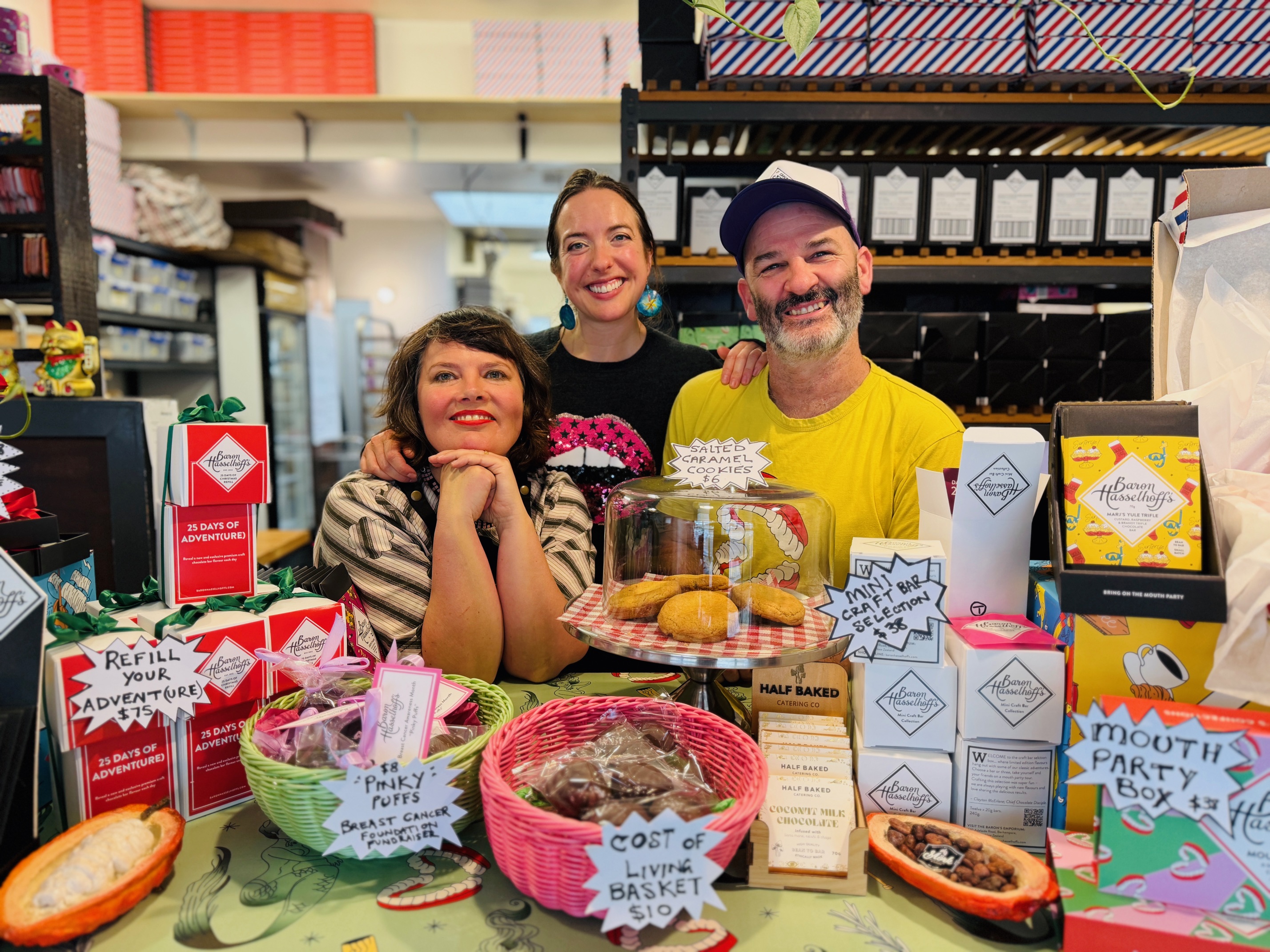
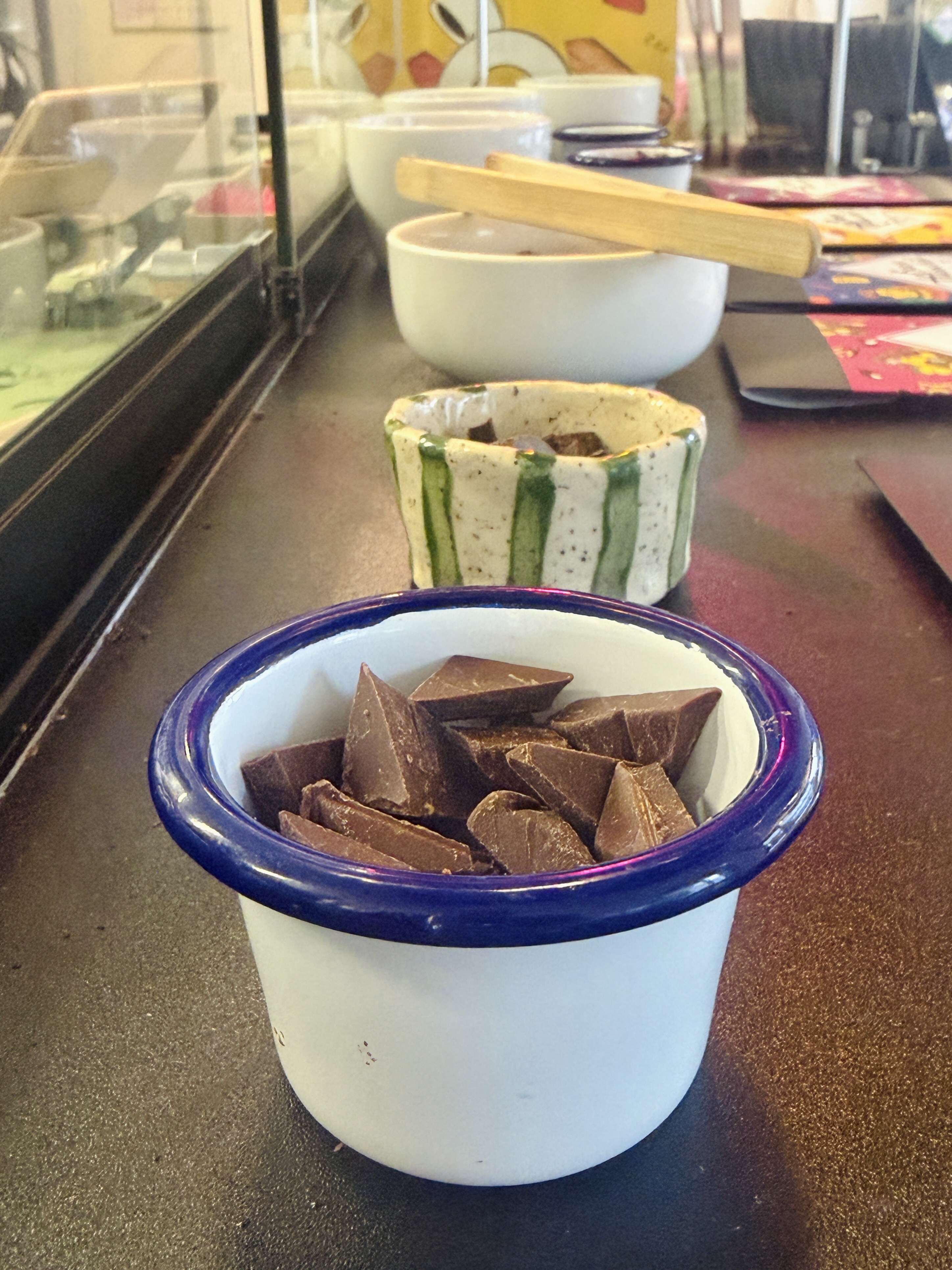
It’s a small space, this Berhampore chocolate haven, a window-side counter with around 4 stools overlooking the outdoor seating. Stacked neatly to the side of the counter are two sacks of Gaston Cacao, I inspect them to see if they are some of the sacks I stitched shut with Oli back in Efate, Vanuatu when he was preparing his international shipments, I think they might be! Opposite the window seating is the serving counter with a gleaming glass cabinet full of delectable treats, woven baskets full of bars and caramels on the counter, and behind that you can see the chocolate being made. There is a hot chocolate menu on the wall to the left that I’m already studying intently for something warming. But it’s not just the chocolate that I’m here for today, it’s also the story, Clayton and Erin’s story of a heart-filled chocolate quest.
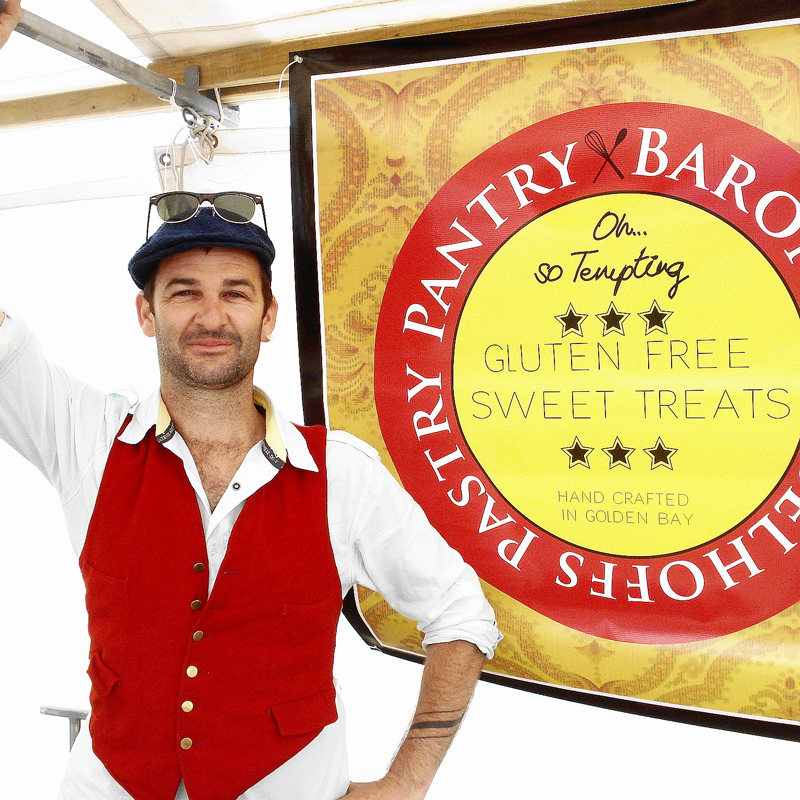
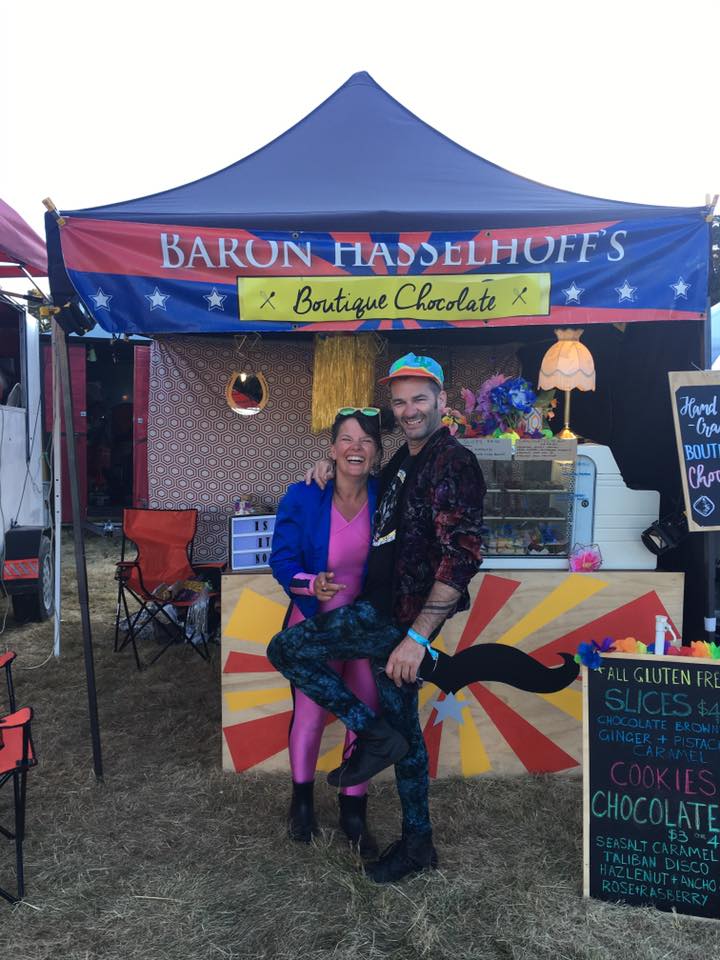
Interestingly, Baron Hasselhoff’s didn’t originate from chocolate at all, it actually began life in Golden Bay in 2012 as a gluten free bakery. Clayton tells me he’d been working in hospitality since he left high school – about thirty-odd years of kitchens, restaurants, cafés – and over that time had developed a couple of recipes he kept in his back pocket for gluten free slices; Ginger & Pistachio slice, Caramel & Chocolate brownies. His boss at the time at one of the cafés would let him use the kitchen after hours on a Sunday, there he would bake, process, package and label these sweet treats, and then sell them through this and other local cafés. A solid side hustle, ticking along part-time for a couple of years.
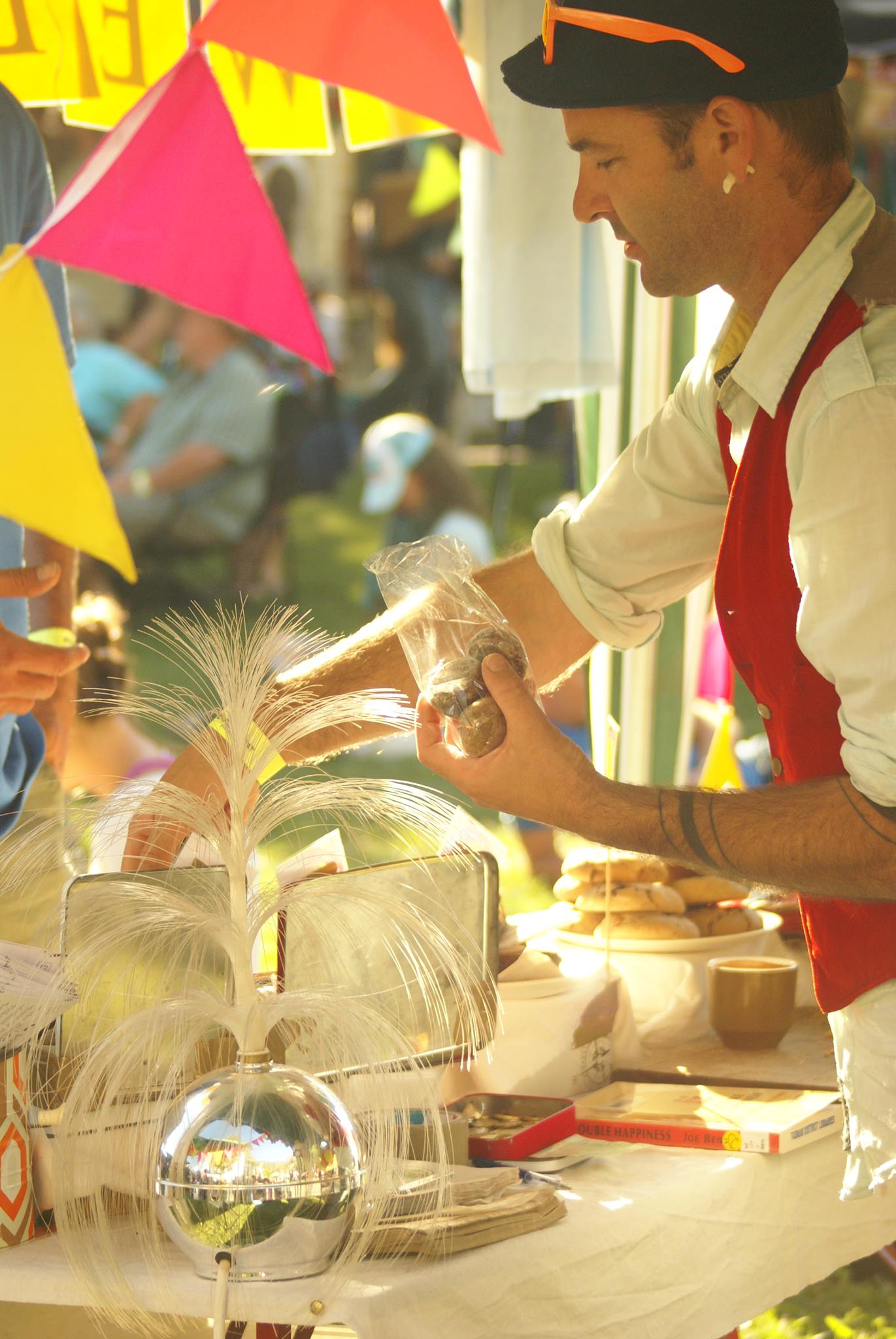
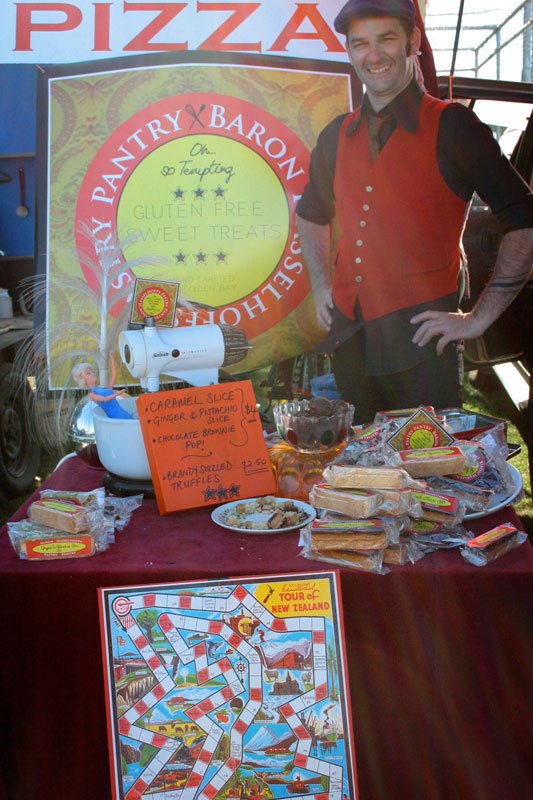
Then, one Christmas Clayton had it in his head he would make chocolate truffles as Christmas gifts for family and friends. He admits at this point he’d never really thought about chocolate much at all, beyond its key role as an ingredient or accompaniment in other dishes. To him, chocolate had always just been something you used in pastry and patisserie. An ingredient you add to bring flavour, depth or texture, never shining in its own right. We agreed that even today, many who work in professional pastry kitchens still don’t fully appreciate chocolate for what it actually is, until they lift the lid and enter a whole new world.
It was making those chocolate truffles that Christmas that sparked something for Clayton. It wasn’t just his own personal pleasure of making them, but the reaction they got when they were eaten. The way people’s faces lit up, the conversations they triggered. They opened up a new dimension for people ‘I realised there is a real, personal, deep connection that everyone has with chocolate in some way or another.’ Claton says, leaning in over his hot chocolate and breathing in its aroma. ‘I’ve been working with food since I left high school, I knew food really connects people, but chocolate just has that little bit extra. That something else that just deepens the connection.’
After the festive chocolate epiphany chocolate became all encompassing for Clayton. There was no turning back, he dove head first into the chocolate world; learning, experimenting, pushing his techniques to new levels. In 2016 he moved to Berhampore and that is when things really began to accelerate. People here were more attuned to the craft movement, more curious about where their food came from and who made it, as a result they were more willing to support small artisan producers.
Erin’s path to Baron Hasselhoff’s took a slightly different route. Before her role as Chief Everything Else Officer, Erin ran a health food company, a social enterprise that’s still going today just behind the Newtown hospital, delivering salads, and green smoothies to offices in and around Wellington central. A noble endeavour by all accounts, but a tough sell compared to chocolate. ‘When I moved on from there I was thinking man…I should have done chocolate’ she says with a laugh. ‘That would have been way easier.’
After attempting an office job (a decision she describes with the kind of horror saved for cold coffee or warm beer), Erin found her self at a crossroads when COVID first landed on New Zealand’s shores. But as with clouds and their silver linings, out of lockdown came an opportunity. She and Clayton were in the same bubble, they could work together and products in the business could move online. She quit the office job (with glee) and got stuck in. ‘We doubled our income the first year’ she says with a beaming smile ‘And it’s just steadily grown from there.’
Up until Erin’s entry onto the Hassellhoff chocolate stage, Clayton had been doing virtually everything alone. Manufacturing, processing, packaging, emails, sourcing, sending out couriers, mopping the floors. All of it. And probably not doing all of it very well, he admits with a sheepish giggle. Erin’s talent lies in systems, organisation, sales, product development, and she LOVES it. Her arrival freed Clayton up to focus on where his magic really happens – The Kitchen! It was by both of their accounts, a major turning point.
When I ask them about their main influences in this industry one name immediately springs to mind for Clayton. Luke Owen Smith, founder of The Chocolate Bar and ChocStock. He’s widely regarded as one of New Zealand’s most passionate and knowledgeable chocolate advocates, and the first person to introduce Clayton to the concept of ‘bean to bar’ in around 2017. It was a revelation, Clayton explains, with a fond look in his eye. Further afield Clayton has drawn deep inspiration from the American craft chocolate scene – the likes of Dandelion Chocolate and Dick Taylor in particular, as well as Goodnow Farms and Manoa. ‘The Americans really are at the forefront of what has been happening over the last fifteen years or so,’ he says ‘and we’ve been really lucky to meet a lot of them too.’ There’s a genuine affection in the way Clayton and Erin talk about not just the New Zealand, but the global chocolate community – the generosity, the openness, the willingness to share knowledge. ‘People in the industry love when you go and visit them.’ Clayton says ‘They are just so generous with their time and willing to share their knowledge. I’ve never found that in any other area of the hospitality industry.’
Closer to home and Karl from Hogarth Chocolate in Nelson gets a special mention too. Karl is something of a pioneer of the New Zealand bean to bar chocolate movement, and Clayton recalls a moment early on in the Baron’s quest when Karl came to Clayton to share some advice and pointed out a few areas for improvement. Clayton laughs ‘The amount of time that saved me just sharing those little nuggets “Don’t do it this way, try that way, use this process instead.” Just that generosity of information sharing.’ They have since tried to pay it forwards, sharing knowledge with newer and smaller makers whenever and wherever they can. It’s what the industry does.
Alongside their bean to bar work, Baron Hasselhoff’s also produces confections, and for these they use couverture from Weave Cacao – a relatively new and deeply inspiring New Zealand company producing the first ever Pacific-made couverture chocolate, working directly with cacao farming communities in Papua New Guinea. At one point Clayton and Erin considered making their own couverture for their confections, but it simply wasn’t cost effective, nor do they have the space for more machinery to cover the scale of production they required. Using Weave allows them to support a Pacific supply chain they truly believe in, while showcasing beautiful chocolate in their own creations. It’s a connection that feels right, and one that strengthens the Pacific links that are so important to the New Zealand craft chocolate scene.
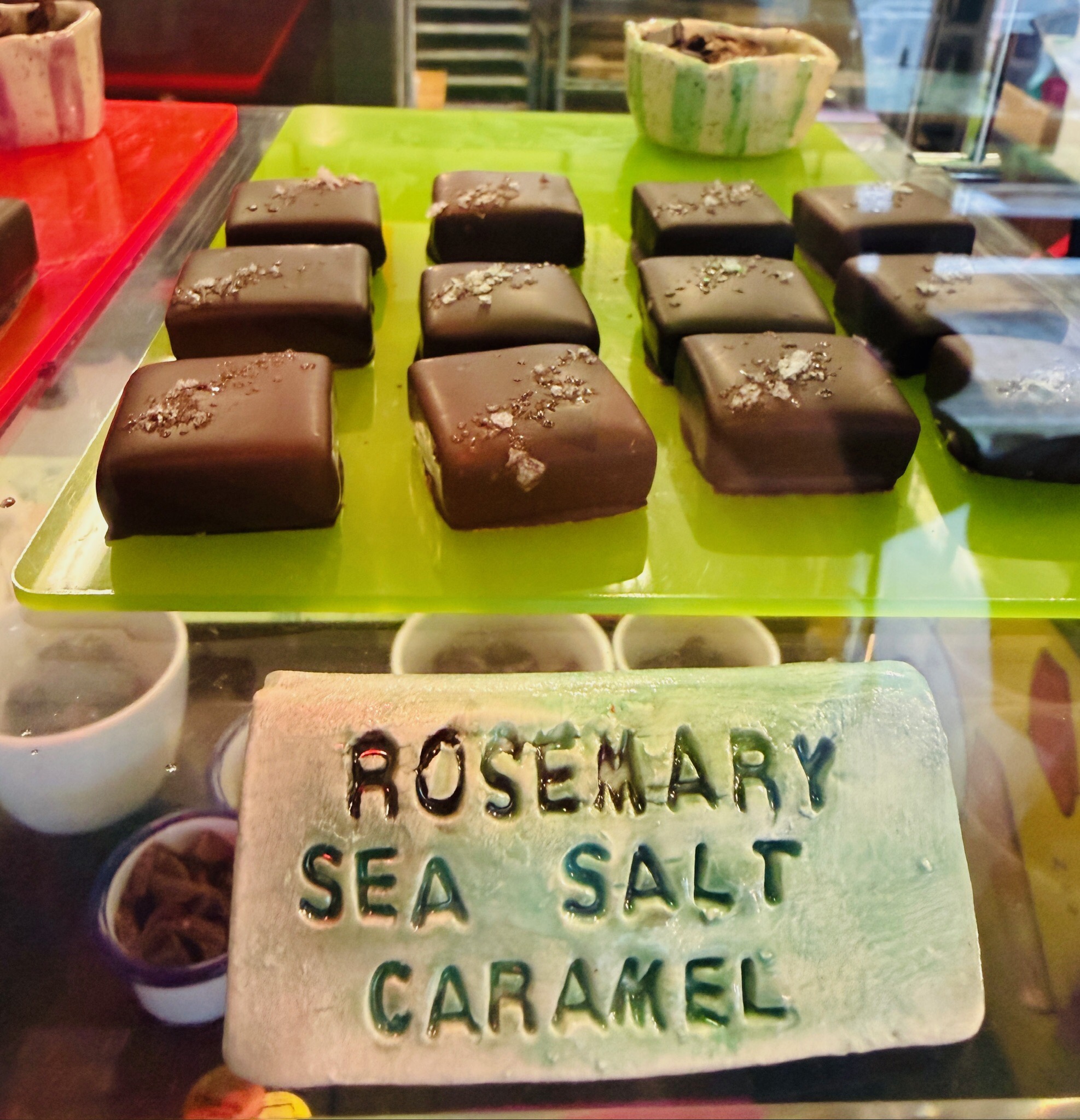
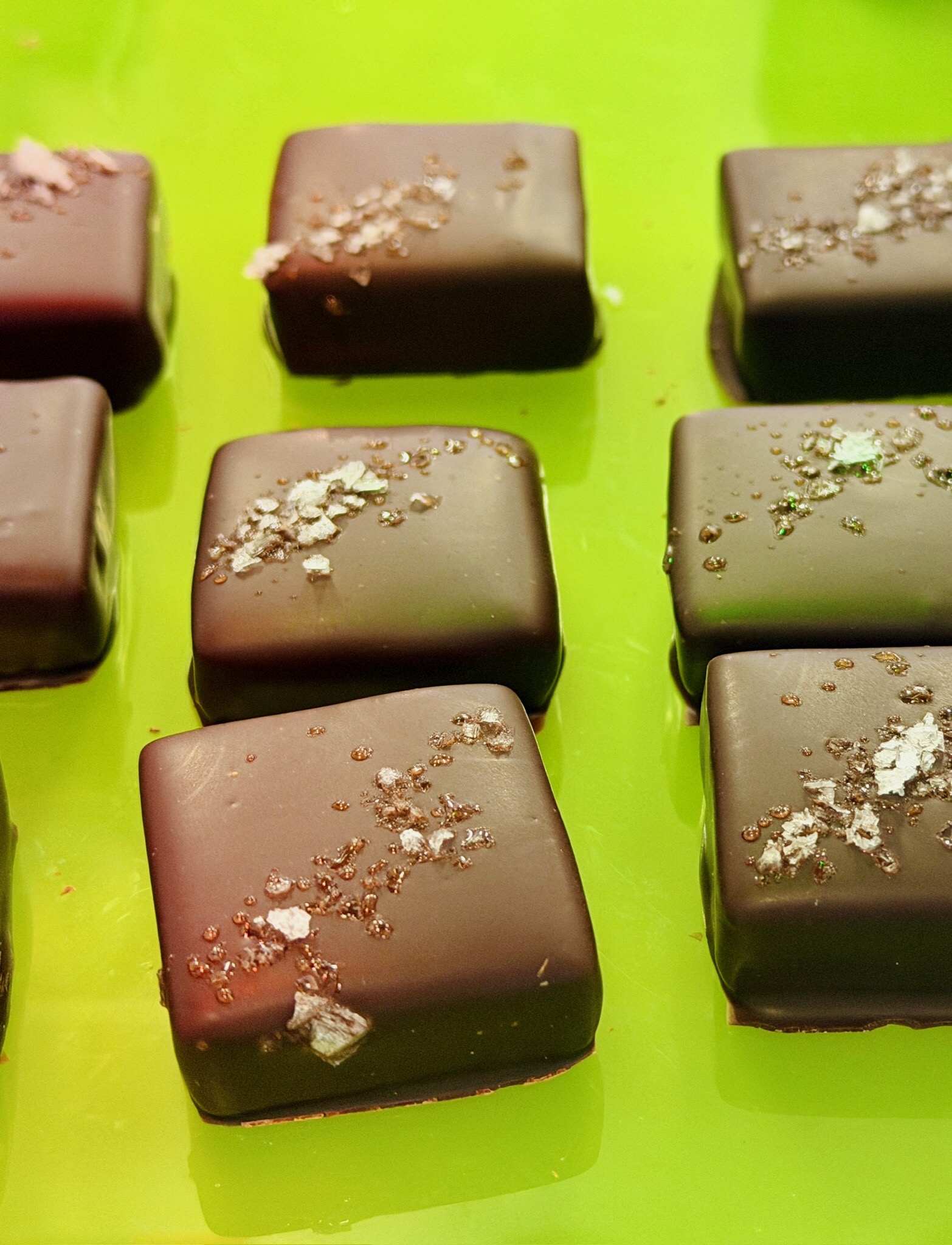
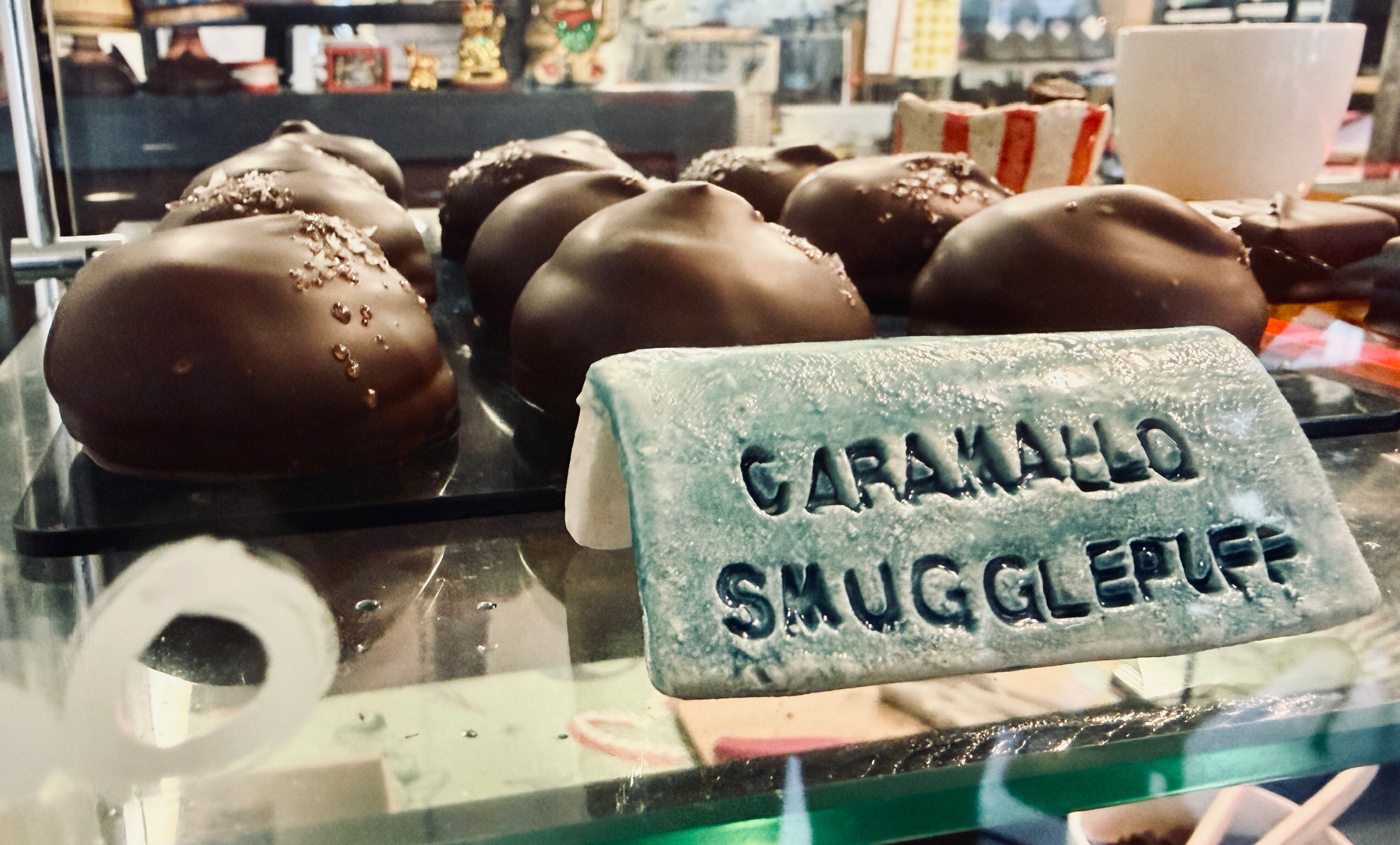
Erin’s pre-chocolate relationship with the dark stuff was, she admits, pretty basic. ‘I had the standard view that most everyone else has; that chocolate was just chocolate, and that dark chocolate was always bitter. That too dark meant too bitter, so I’ll just stick to the milk chocolate, thanks.’ she says ‘Which turned out to be just sugar and bad fats.’ She’s considerably more refined now, she proudly admits, and relishes each opportunity in the shop with a new customer to help dispel the myths on dark chocolate.
Something they both wish people knew about chocolate is that it is an agricultural product. Someone has grown and processed the fruit of a plant before it even arrives to the makers door, before it is even turned into chocolate. They also wish people understood and appreciated that there is a whole world waiting to be discovered beyond the standard ‘Belgian’ chocolate facade, and that most people wouldn’t even recognise a cacao pod even if they saw one. Then there’s the alchemy of it, the way different roast profiles coax out entirely different flavour profiles from the same beans. For them one of the benefits of having a physical shop front is the ability to educate their consumer base and build a rapport with them. To share all the knowledge they can about this magic, one conversation (and one chocolate) at a time. A kind of community service, as Clayton likes to put it.
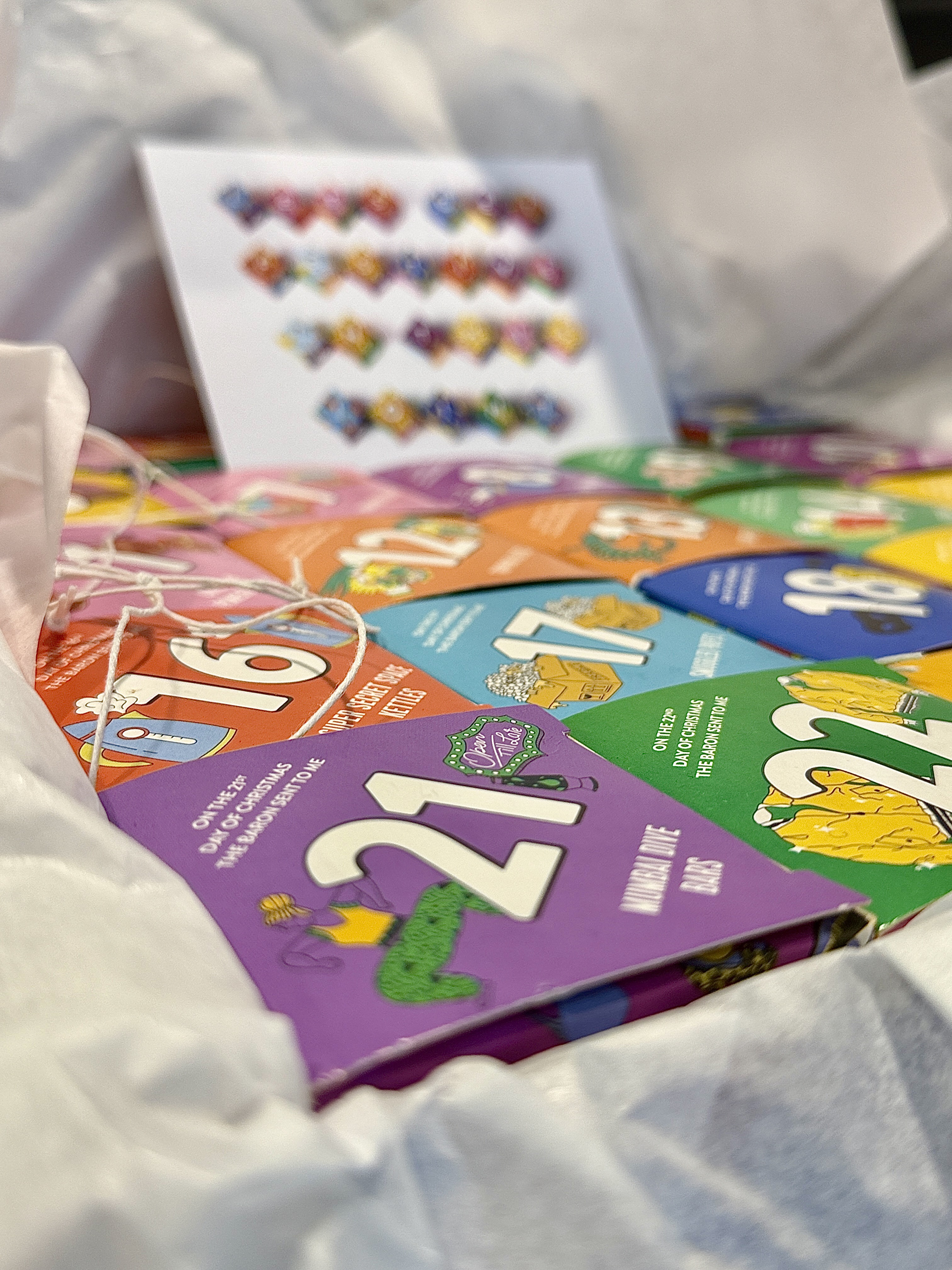
When I ask them about their proudest moments, the answer changes depending who you are asking (and also, apparently, what day of the week it is). Their advent calendar was a massive project (and success), multiple printers, enormous logistics, a meaty project by all means. But Erin notes their wins and proud moments change from month to month, season to season. Sometimes it’s sales, sometimes it’s the simple fact they are still going at all, still here and doing well, despite the truly challenging economic climate. They are true innovators in their field.
Product innovation itself at Baron Hasselhoff’s follows a rather delightful democratic process. Each month a new one off product is released through Fresh Dispatch – typically twelve new flavours across a given year – which doubles as product development. After Christmas, customers vote on their favourites with the winning flavour or product being brought to market as a permanent product the following year. There is, however, one constitutional caveat. That the Chief Chocolate Disciple retains the ultimate right of approval (or veto) on the winning product for the forthcoming year. Sometimes a winning flavour is just too similar to something already on the shelves, or there simply isn’t room in the product line. Products will also get retired when, as Erin puts it, ‘the people speak with their monies’ and choose new products over old favourites.
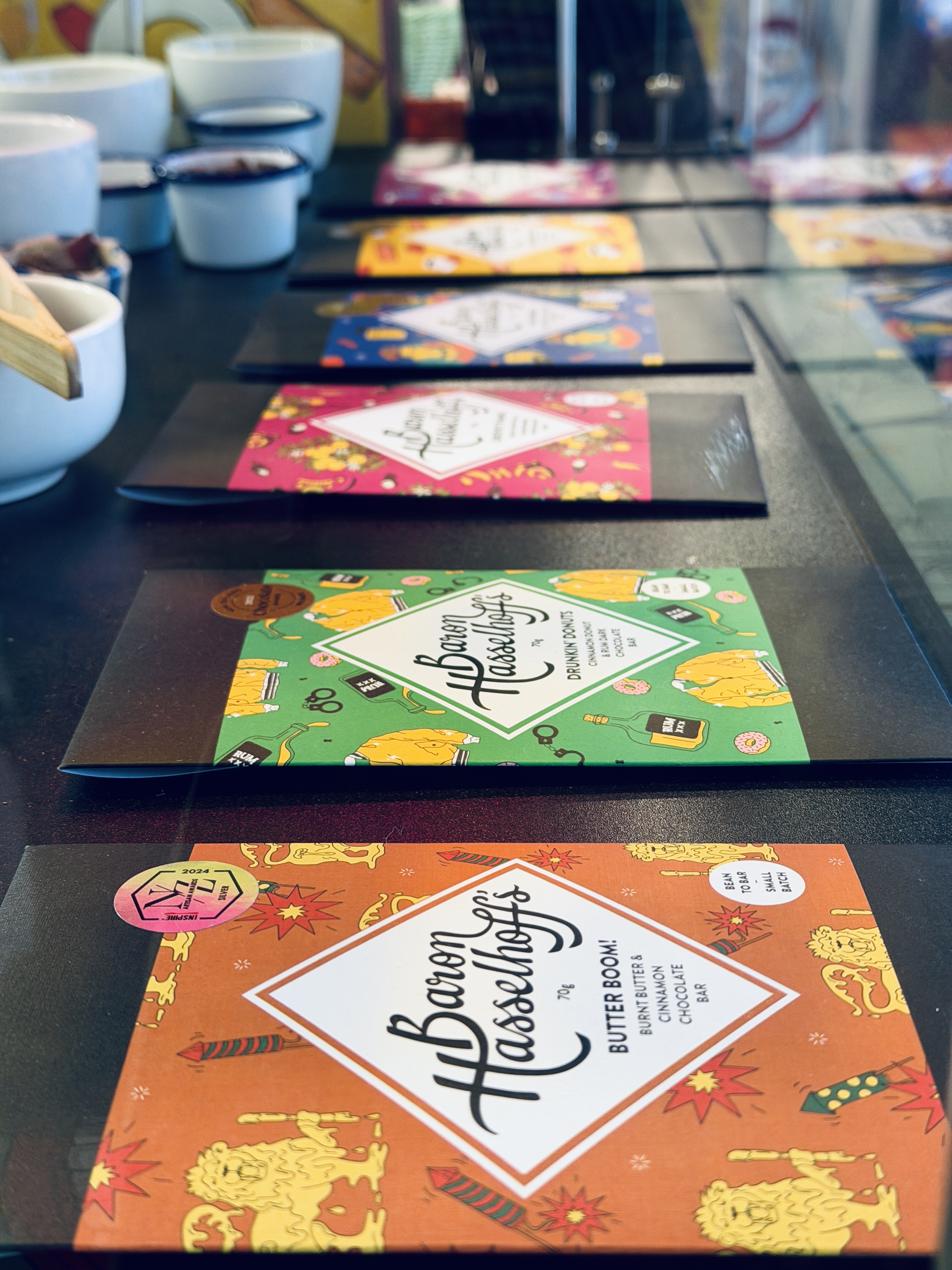
It’s not always a happy world in chocolate land though. The challenges they face are very real, and they don’t shy away from discussing them. The price of cacao and cacao butter for example has been extremely volatile for about two years now. With cacao butter in particular going, as they say, completely off the charts in terms of pricing. As a result everything has to be pre-paid, which puts enormous strain on cash flow, especially when wholesalers don’t pay until the twentieth of the month. The gap between outlay and recoupment is stretching longer and wider. It’s stressful and they know eventually, reluctantly, their terms will have to change too. But they also feel the wider industry needs a shift in it’s own thinking. If wholesalers want to keep quality makers and quality products on their shelves, then something has to give. Pricing too, of their own products, is a complete and constant balancing act. With Erin musing ‘I wish it was like the petrol industry, then we could set the daily price.’
They want their products to be accessible, not positioned as unattainable luxury. But they also need to be sustainable as a business. With wholesale now forming a significant part of their volume, there’s always the added pressure of retailers wanting to put their own margin on top without blowing out the consumer price. It’s a puzzle without any current easy solution.
There was also, Clayton mentions almost in passing as a little after thought, a fire when they first moved into their current premises. But these are two creative and entrepreneurial people who will stop at nothing and who seem to almost relish any challenge sent their way. ‘If we were just plugging away and doing the same thing every day and it was just plain sailing, we would get itchy feet, we’d get really bored.’ Clayton says. Explaining ‘We like taking the challenge, we don’t mind taking a bit of a risk sometimes.’
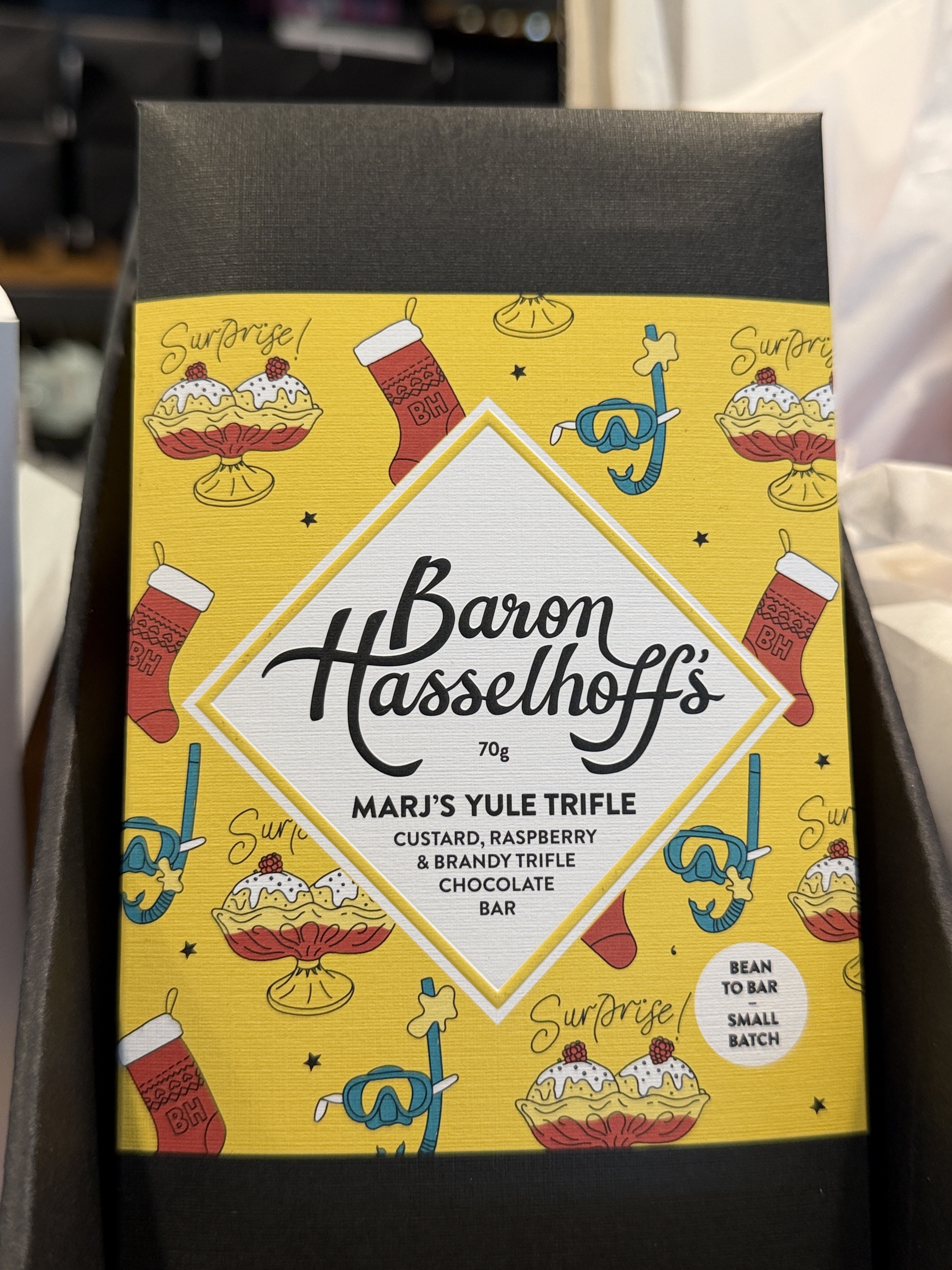
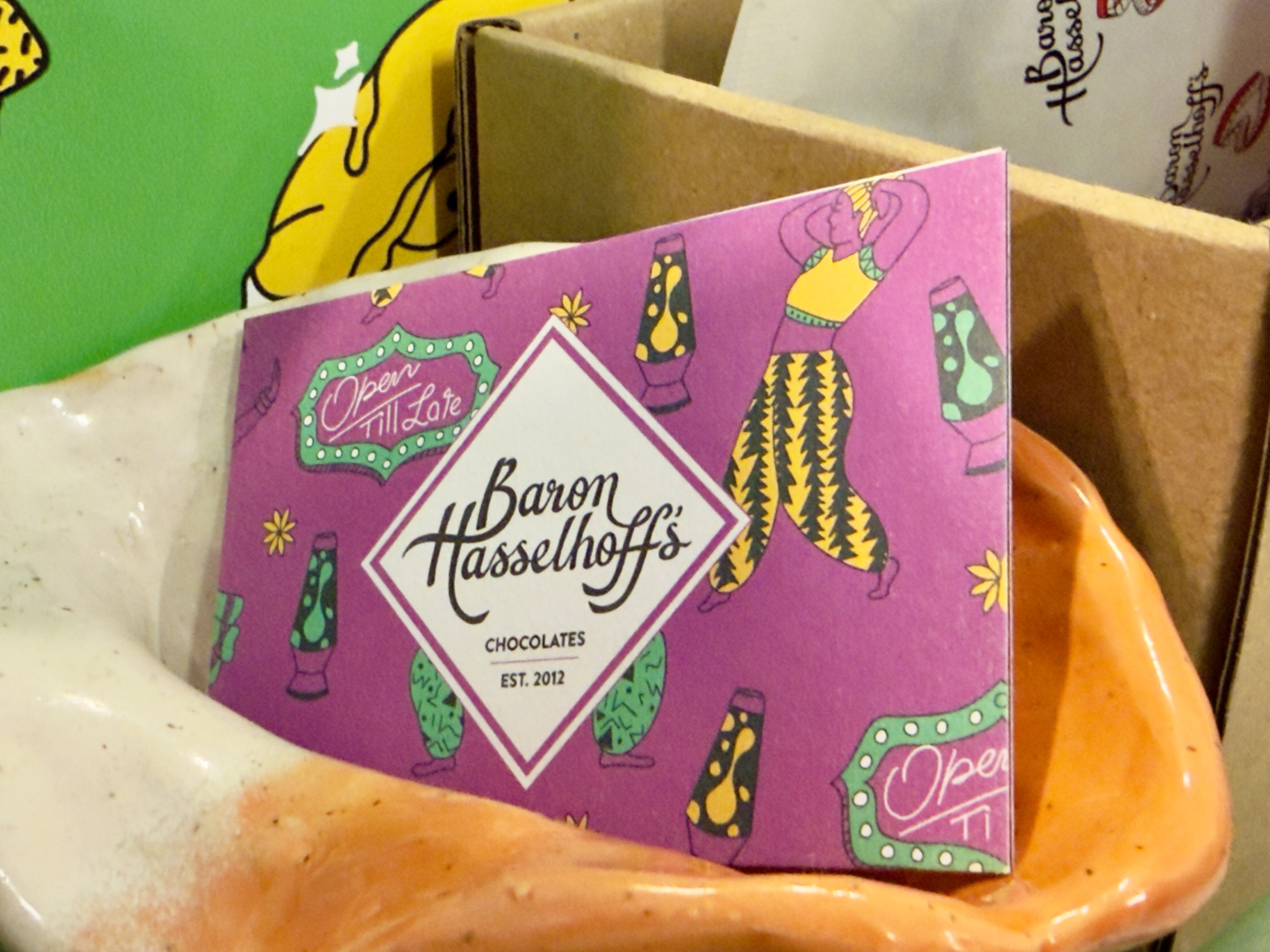
And the next risk (or dream, depending on how you shape it)? That would be the Chocolate Emporium. Not the little shop front they have now (as utterly delightful as it is), something altogether grander, and more magical. A bigger space, in the city, with access to more foot traffic, more tourists, more eyeballs. They want to build something whimsical and fun, with a childlike innocence to it. Capitalising on the magic they have already created in the world of Baron Hasselhoff. Something playful. Areas of the factory where customers can watch the work going on in real time. Tables that are a bit low to the floor than would be expected. Stairs you have to climb to reach other seats. Swings you can sit on. ‘We want to create something for the city that is fun and centred around chocolate.’ Clayton explains, his eyes lighting up with that all too familiar cheeky grin ‘Roald Dahl’s Chocolate Factory vision brought to life.’ They have already created this world through their existing packaging – vivid, joyful, bursting with personality and charm – and now they wish to bring those vibes into reality. But at the right time, for things like this can’t be rushed.
A perfect example of rushing, Erin explains, was their trip to Northwest Chocolate Festival in Seattle a few years’ ago. Everything was done at pace ‘Let’s go, go, go. To this Chocolate Mecca’ and in all the chaos and excitement Erin accidentally took someone else’s bag at the airport turnstile, their chocolate got stuck in customs because they’d posted it instead of carrying it with them, they didn’t have their customs number, and they arrived at the festival with no chocolate to show. However, the chocolate did arrive at the eleventh hour, right before the event started, because of course it did! ‘I do think that is very us though’ Clayton chymes in ‘The chaos and then all coming together right at the last minute. But not any more, things are changing.’ Despite this chaotic success though, they were one of the New Zealand pioneers at this festival (Karl of Hogarth Chocolate, and Brian of Miann Chocolate fame, having attended in previous years also). Going before many other Kiwi makers and ventured there. David from Foundry Chocolate went a year or two later, and they were able to excitedly hand him their long list of what not to do, along with their other list of things to do.
When I ask them what’s top of mind right now, the conversation turns serious. Pricing and volatility. If cacao prices keep going the way they are, businesses will just fall over. The era of cheap cacao is done, and Clayton can’t see it coming back down much from where it currently is now. At some point, makers will have to raise their prices, and how consumers respond to that is a genuine concern. Education becomes critical – even more so than it already is – helping people understand why their chocolate is no longer the bargain it once was. Strong retail – ideally your own retail – is also more important than ever, they tell me. The margins are better, the cashflow is immediate, and you get the face-to-face opportunity and time with the customer that allows for education and genuine connection. Wholesale is still a big part of their business, around 50% of their volume, but the future focus is shifting towards retail. With retail it is cash money.’ Erin says, ‘And you get the face time, the opportunity for education. The interaction is immediate, or wonderful, and you can fix problems immediately.’
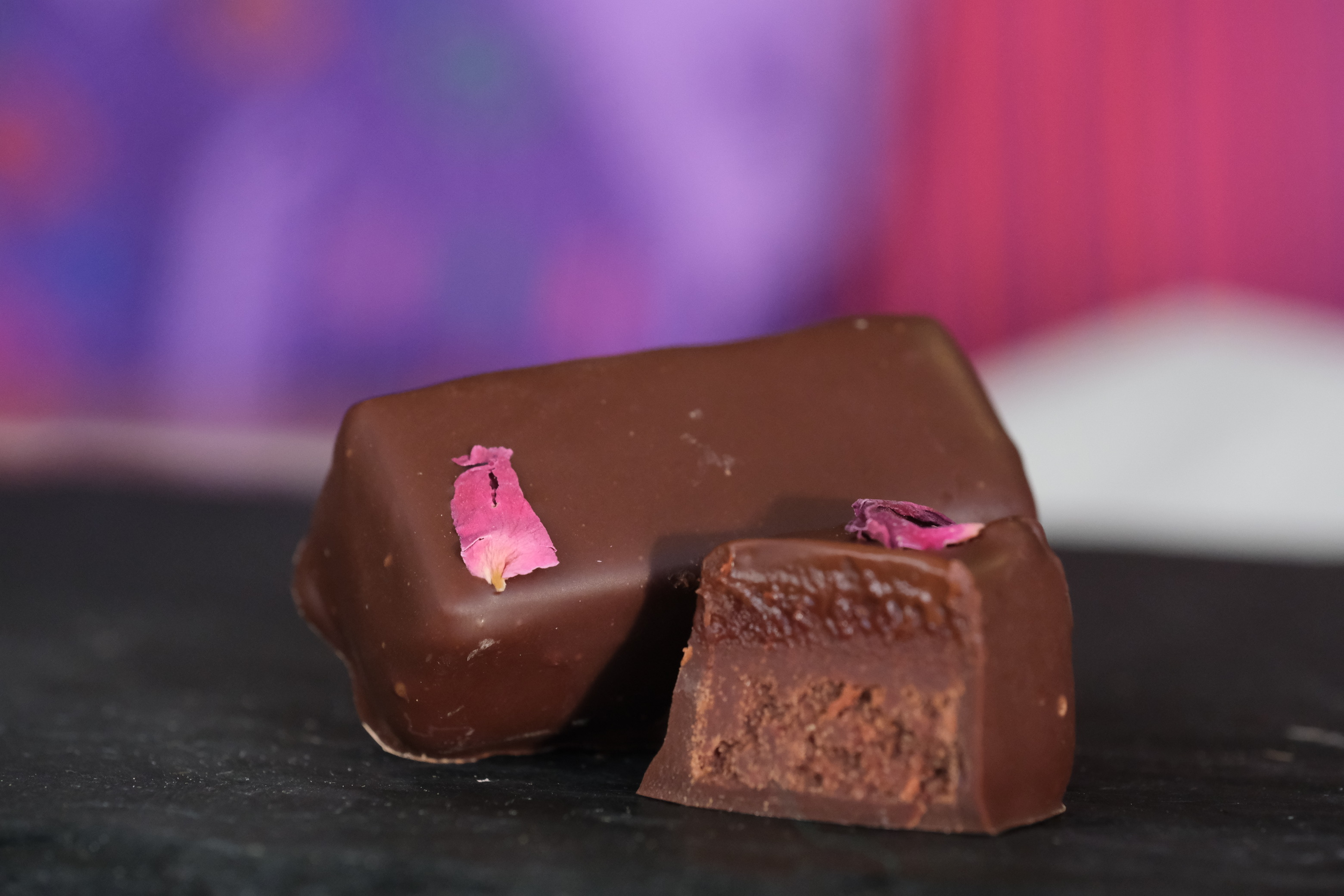
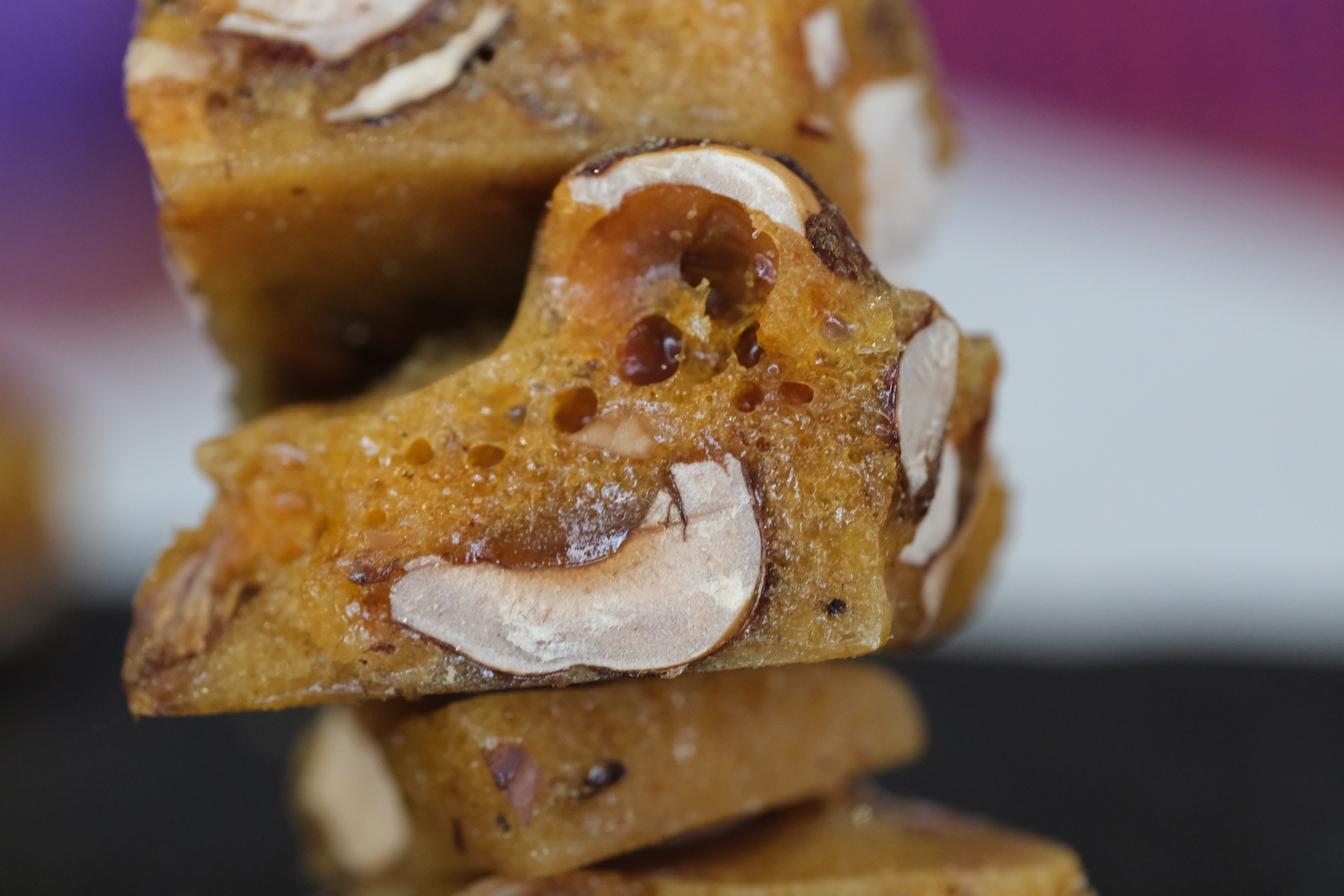

One initiative I find particularly delightful, and in keeping with their community focus, is their ‘Cost of Living’ basket – half the price, half the packaging, but still a small profit for the business. People come in from around the neighbourhood to pick one up. It’s the kind of thing you can only really do in retail they tell me, it wouldn’t work in wholesale. A bit like the Wonky Boxes for veggies, fruits, even cut flowers now – reducing waste while bringing people little cost of living joy-packages. I love it! But that’s not all, they have done so much for their local community in the wider sense too – donations for school auctions, supporting local causes, even giving their cacao husks to the local orchard for mulch around the apple trees in the local orchard. The same orchard who one year gave them some of the apples from those trees, which they then dehydrated and made into a bar, a beautiful example of a circular economy. ‘Hopefully the community is proud of us being here’ Clayton enthuses ‘It’s nice to be more than just a business and be a part of the community.’
As for ambitions, the magic number is one million (for now). That’s $1M turnover in a year. They’re not there quite yet, but they are getting close, maybe two years out. But it’s a concrete milestone that drives every decision they make, from packaging choices to product lines, to the push of some of those products to the supermarkets. There’re currently in ten New World’s, positioned in the gifting section, which is a smart move. Their price point sits alongside the likes of Ferrero Rocher and Cadbury Favourites – affordable enough as a gift, but an absolute world apart in terms of quality. This is what I like to call their ‘gateway product’ introducing people to the brand and the concept. ‘That’s how so many people discover us’ says Clayton ‘Oh, I got given a box of your chocolates.” And then they come in saying they need it again.’
The day begins to darken somewhat and before we leave I ask the last question I always like to close with; one piece of advice for someone about to embark on a similar journey.
Clayton doesn’t hesitate. ‘Find your point of view as early as possible.’ he says. ‘Sometimes you think “I love chocolateI’m gonna go make chocolate.” But you have to have a point of view and a drive, and you want to translate that through your branding, your packaging, your product. Find that point of view and get it across to people as soon as possible. It’s no longer enough to just say “I am bean to bar, I use the best beans, the finest processes, attention to detail.” So does everybody else. Unless you are someone like Foundry who can totally get away with this because his chocolate is just out of this world.’ Erin’s advice is more relational. ‘Establish your relationships and establish them early. Talk to a lot of people. Really do your market research and have patience.’ Patience. It always comes back to that. Even the process of making chocolate cannot be rushed. The dream, much like the chocolate, builds itself when you don’t try to force it.
As we step back out onto Adelaide Road, the wind still has bite to it, and it’s definitely getting dark now. But we’re properly warmed up, both from the hot chocolate and the conversations. These two have built something truly special in their little corner of Berhampore – something joyful, generous, just oozing magic, and deeply connected to its community. The bigger Emporium will come. The million-dollar year will land. But in the meantime, there are truffles to make, melangers to tend, and a neighbourhood to nourish.
Clayton’s parting words stay with me as we head back to the car, absolutely laden with chocolate. Three words, spoken with absolute conviction, a smile and a sparkle in his eye that tells me he means every syllable.
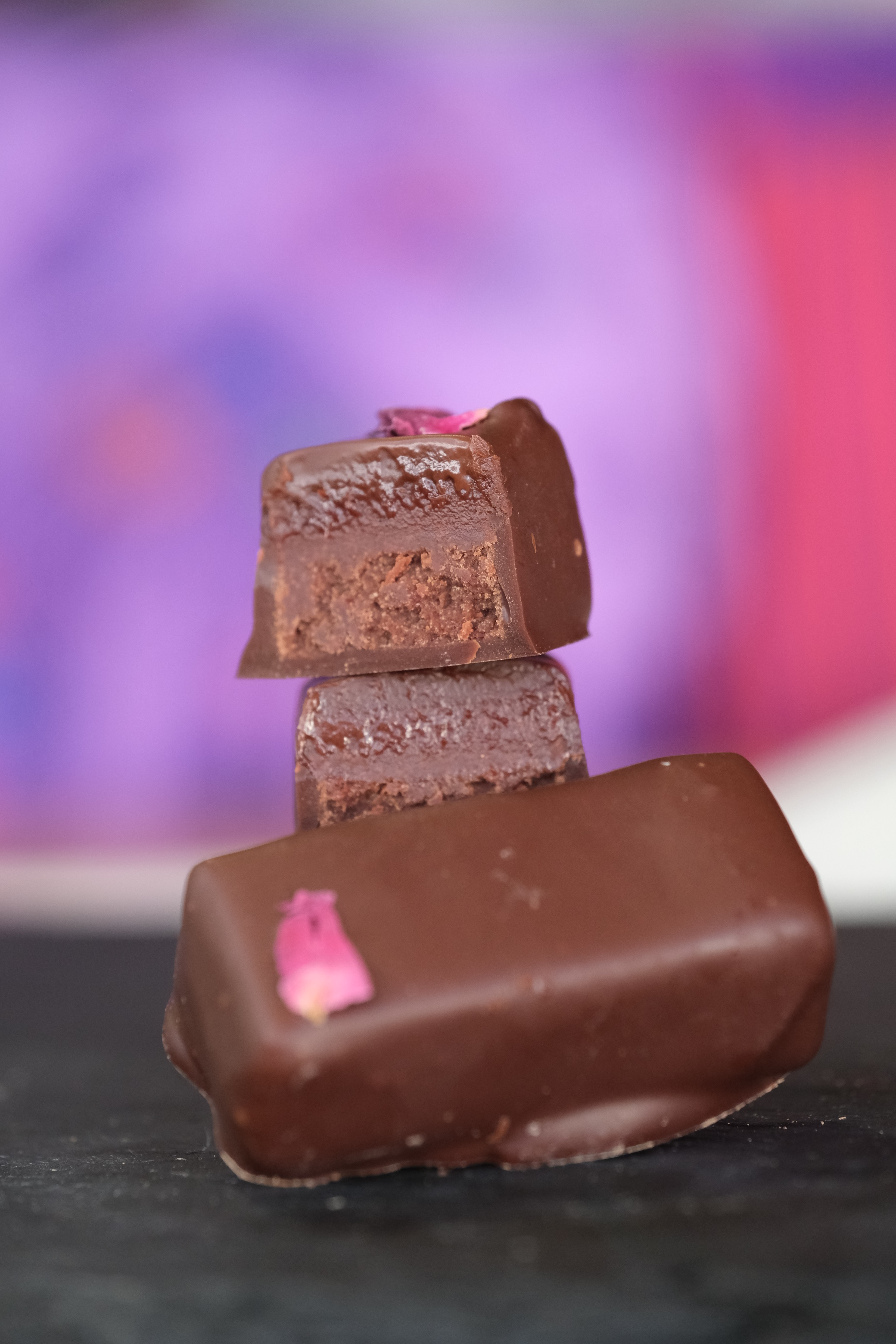
‘Chocolate is magic.’ And of that, I know, he is right.

 The Adventures of Elle Coco